
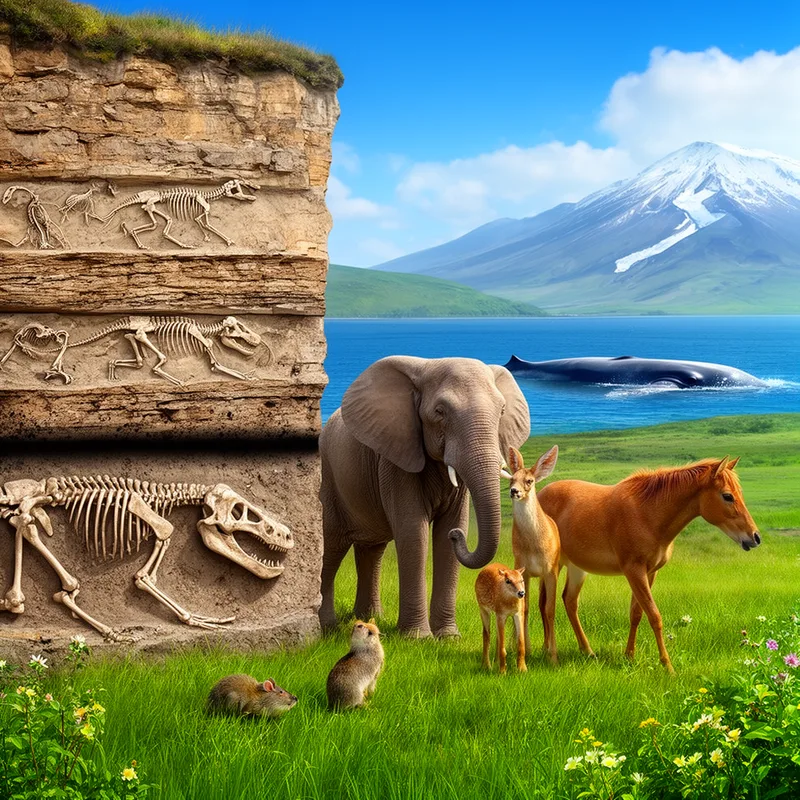
Cenozoic
- noun
- /ˌsɛnəˈzoʊɪk/
- Specialized
- The Cenozoic is marked by significant developments in mammalian and avian life.
Examples
-
The extinction of the dinosaurs marked the beginning of the Cenozoic era.
-
The Cenozoic era began after the extinction of the dinosaurs.
-
Geological evidence from the Cenozoic provides insight into how Earth's climate has changed.
-
Many modern mammals evolved during the Cenozoic period.
-
Many mammals evolved during the Cenozoic period.
-
Scientists study fossil records from the Cenozoic to understand the evolution of modern animals.
-
During the Cenozoic era, mammals became the dominant land animals following the extinction of the dinosaurs.
Synonyms


 1
5.8
1
5.8
A long time in Earth's history since dinosaurs died when mammals became the main land animals
A recent time in Earth's history since about 66 million years ago when mammals and birds became the main animals
Compounds
- Specialized
A recent time in Earth's history since about 66 million years ago when mammals and birds became the main animals
Surface Forms
Morphology
Cenozoic = ceno + zoic
Formed from specialized Greek combining forms (ceno- 'recent' + -zoic 'pertaining to life/animals') used in geological terminology, which is not transparent to an average B1 learner.
Etymology
Cenozoic gets its name from Greek Ceno- 'new' and -zoic from zoe 'life', so it means 'new life'. Think of a zoo to remember -zoic is about life, and that is why the Cenozoic is the current era when mammals and birds became dominant.