
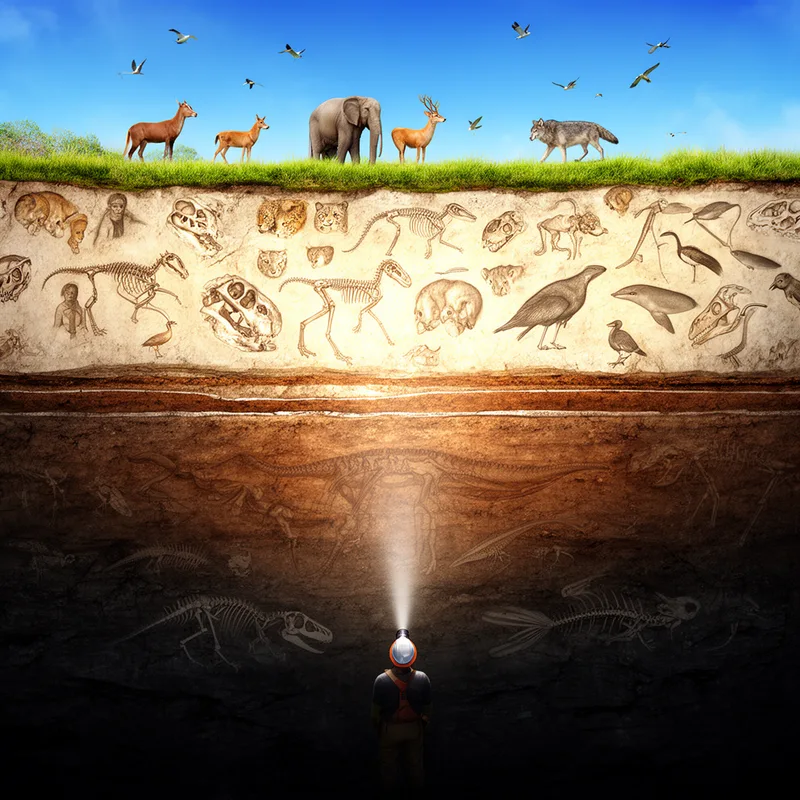
Cenozoic


 1
9.9
1
9.9
- adjective
- /ˌsɛnəˈzoʊɪk/
- Specialized
 :
cenozoico
:
cenozoico
- During the Cenozoic Era, the chalk was then uplifted, and as soon as the last ice age was complete, sea levels then rose, and the English Channel formed, cutting into the chalk to form the dramatic cliffs along the Sussex Coast.
Examples
-
The last major weathering episode likely brought about the end of the Cenozoic "hothouse" climate and led to the onset of Milankovitch-driven glaciations in the Quaternary.
Blog text (16) -
Every season, crates of quartz tools and ancient mammal fossils were shipped off to the Cenozoic Laboratory.
Academic text (2006) -
"Implied rhyme was discovered by a Cenozoic girl whose foot had gone to sleep.
Fiction book (1999) -
This time, he brought them to the Cenozoic Laboratory of the Geological Survey at the Peking Union Medical College.
Academic text (2006) -
During the Cenozoic Era, the chalk was uplifted (see Cenozoic Era).
Blog text (32) -
South America's initial phase of Cenozoic mammal evolution, from 65 million to 34 million years ago, is known as Stratum 1.
Academic text (2009) -
Although today connected to North America by the narrow Isthmus of Panama, South America was an island continent for the bulk of the Cenozoic era, the so-called Age of Mammals (from 65 million years ago to present).
Academic text (2009) -
It belongs to a group called notoungulates, native hoofed plant eaters that persisted in South America for most of the Cenozoic era, evolving a remarkable range of body forms.
Academic text (2009) -
The Cenozoic era is marked by the dominance of mammals and the evolution of diverse species.
-
Many fossils from the Cenozoic period help scientists understand the changes in Earth's climate.
Compounds
- Specialized
A recent time in Earth's history since about 66 million years ago when mammals and birds became the main animals
Surface Forms
Morphology
Cenozoic = ceno + zoic
Formed from specialized Greek combining forms (ceno- 'recent' + -zoic 'pertaining to life/animals') used in geological terminology, which is not transparent to an average B1 learner.
Etymology
Cenozoic comes from the Greek parts Ceno- meaning 'new' and -zoic from zoe meaning 'life', so it literally means 'new life'. That's why Cenozoic is used as an adjective for the most recent era of Earth's history, when modern mammals and birds became common.