
A.D.
- adverb
- /ˌeɪˈdi/
 :
d.C.
:
d.C.
- The Roman Empire fell in A.D. 476.
Examples
-
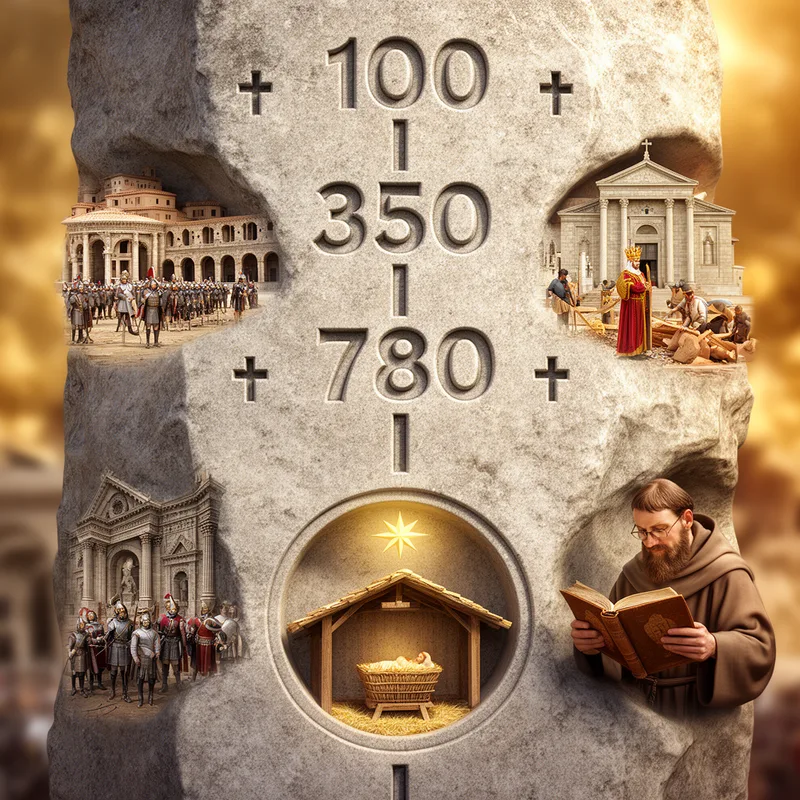
The manuscript dates back to A.D. 780, making it over a thousand years old.
-
The Roman Empire was at its peak around A.D. 100.
-
The temple was constructed in A.D. 350 by the local king.
-
In A.D. 1000, many believed the world would end.
-
The manuscript dates back to A.D. 780, making it over a thousand years old.
-
The Roman Empire was at its peak around A.D. 100.
-
In A.D. 1000, many believed the world would end.
Synonyms

 6
8.2
6
8.2

The year in the Christian calendar used when writing dates like AD 1865

Put before a year to show it is after the birth of Jesus

To show a year is after the birth of Christ

A year counted since the birth of Jesus, used in formal or historical dates

Used to mark years in the Common Era, like A.D

Years counted from year 1 in the calendar used today
Surface Forms
Etymology
A.D. comes from the Latin phrase Anno Domini, which means 'in the year of the Lord'. So, when we put A.D. before a year we are counting years 'in the year of the Lord', that is, from the traditional birth of Jesus.