

year of grace
- noun
- Archaic
- In the year of grace 2000, many churches held special services to celebrate the new millennium.
Examples
-
They were pilgrims from different nations, come south to receive absolution for their sins during that special Christian year of grace.
Fiction book (2002) -
The historian referred to the year of grace 1066 as a pivotal moment in English history.
-
The role of the laity in bringing about a renewal of faith during this year of grace is also equally indispensable.
Blog text (34) -
During the year of grace 1530, significant changes began to reshape the religious landscape of Europe.
Synonyms

 6
8.2
6
8.2

The year in the Christian calendar used when writing dates like AD 1865
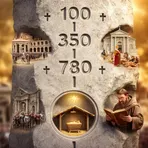
Put before a year to show the date is after Jesus's birth
Surface Forms
Morphology
A B1 learner who knows 'year' and 'grace' would likely interpret 'year of grace' as a year characterized by grace, not as a calendrical formula referring to years since Christ's birth. The usage is an archaic/formal religious formula (equivalent to 'in the year of Our Lord' / Anno Domini) and this specific calendrical meaning is not transparently derivable from the literal constituents, so it would be unpredictable without prior exposure.
Etymology
Year of grace comes from old church papers where writers called each year a gift from God and counted time from the birth of Christ. That's why the phrase means 'any year since the birth of Christ' or 'a year in the Christian calendar'.