
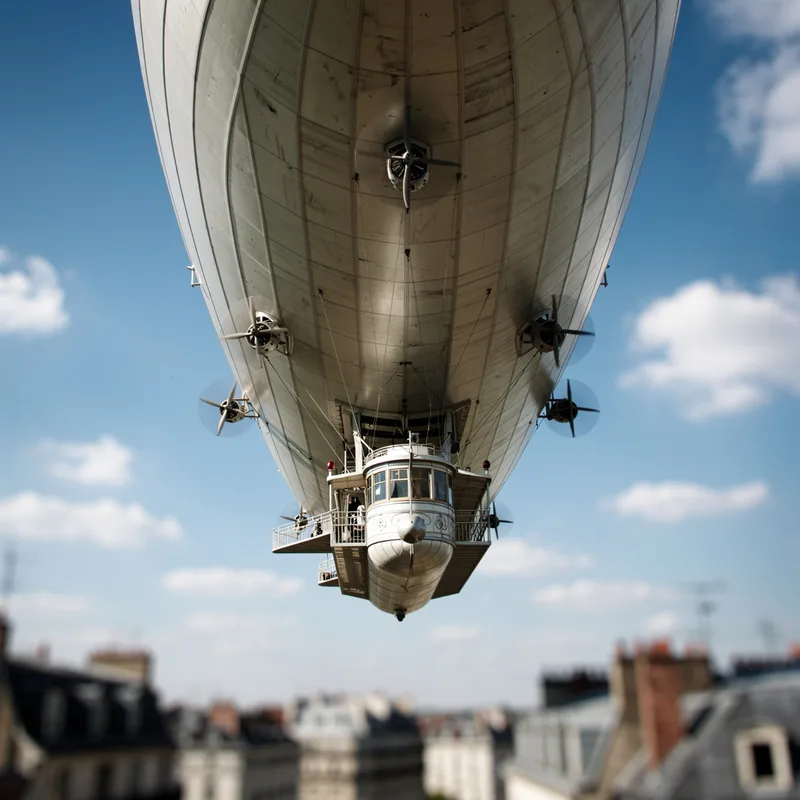
zeppelin
 42
8.2
42
8.2

- noun
- /ˈzɛpəˌlɪn/
- During World War I, the use of zeppelins for bombing raids caused concern among civilians living near targeted cities.
- a German zeppelin
- zeppelin in the air
Loading YouTube…
Watch on YouTubeThis would be the last Zeppelin brought down of the war.
- This would be the last Zeppelin brought down of the war.
- For this week, the skies were alive with German Zeppelins.
- Or, to put that in layman's terms, God was on shrooms and was hankering for a little laser Zeppelin.
Examples
-
I guess they run away to America on a zeppelin with everybody singing like mad.
-
A German zeppelin is on its way to bomb Paris.
-
I remember that across the cemetery grounds, another victim of the zeppelin crash was being buried.
Fiction book (1998) -
The Graf Zeppelin, the second largest airship ever built, stopped here on its voyages around the world.
Academic text (2009) -
By war's end, 670 Londoners had been killed by bombs from zeppelins and airplanes.
Academic text (2005) -
The passengers enjoyed a scenic view of the mountains from the deck of the zeppelin as it soared gracefully through the sky.
-
In the early 1900s, a zeppelin was a popular mode of transportation for those who wanted to travel across Europe in style.
Synonyms
 21
5.6
21
5.6
A large steerable flying machine filled with a light gas like helium
 4
9.3
4
9.3
A large air vehicle like a balloon that people ride and you can steer
 1
8.1
1
8.1
A flying machine like a balloon or airship that floats using a light gas
 1
5.9
1
5.9
An aircraft that floats because it is lighter than the air, like a balloon or airship
Compounds
How Big

Surface Forms
Etymology
The word zeppelin comes from the name of a German inventor, Count Zeppelin, who built the first large metal-framed airships. So zeppelin now means a large 'airship', a big flying ship that floats in the sky.