
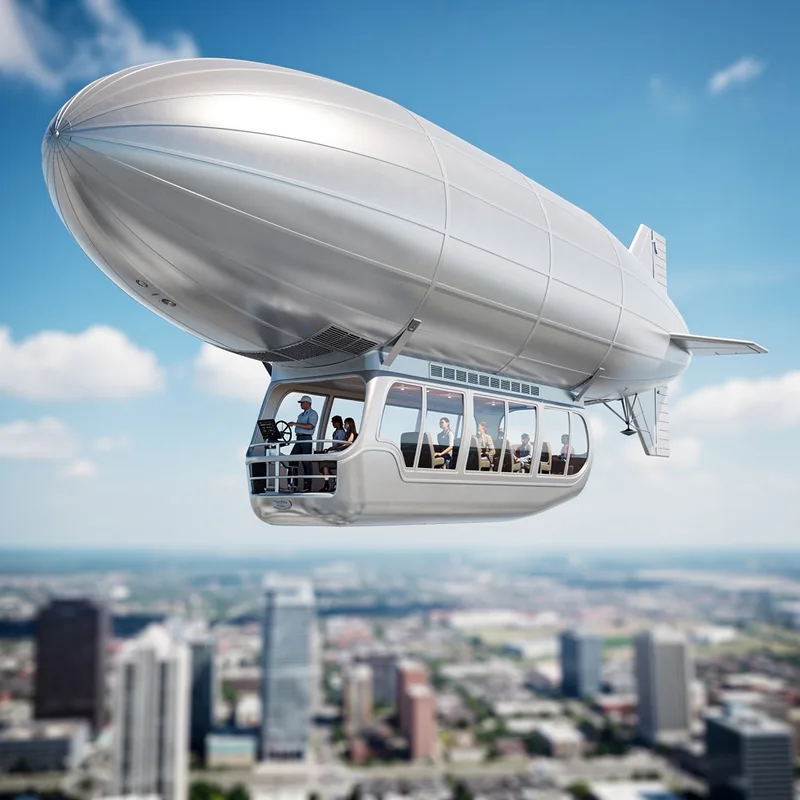
dirigible
 4
9.3
4
9.3

- noun
- /ˈdɪrɪdʒəbl/
- Archaic
- The dirigible floated gracefully above the city, offering breathtaking views from its decks.
- dirigibles and blimps
- Hindenburg dirigible
- dirigible fleet
Examples
-
Although some explorers used balloons and dirigibles, the most common mode of travel was with dog sleds.
Academic text (2000) -
History has demonstrated that a specialized dirigible of this type can float in the air for only so long.
Blog text (30) -
Our agent in Friedrichshafen, a man named Ibidson... actually saw the dirigible and made a drawing of it.
-
The beloved explorer lands his dirigible the Spirit of Adventure, in New Hampshire this week, completing a year-long expedition to the lost world.
-
In the 1930s, there was a new burst of North Polar activity via dirigibles and airplanes, with Amundsen involved in both.
Academic text (2000) -
During the early 20th century, a dirigible was the ultimate in luxury travel across the skies.
-
They watched as the dirigible slowly ascended, its large envelope filled with helium and ready for flight.
Synonyms
 42
8.2
42
8.2
A large airship with a metal frame used to carry people and sometimes bombs in the early 1900s
 21
5.6
21
5.6
A large steerable flying machine filled with a light gas like helium
 1
5.9
1
5.9
An aircraft that floats because it is lighter than the air, like a balloon or airship
How Steerable

Surface Forms
Etymology
Dirigible as a noun comes from the Latin dirigere, meaning 'to steer', and was used for airships because, unlike free balloons, a dirigible can be steered and guided through the air.