
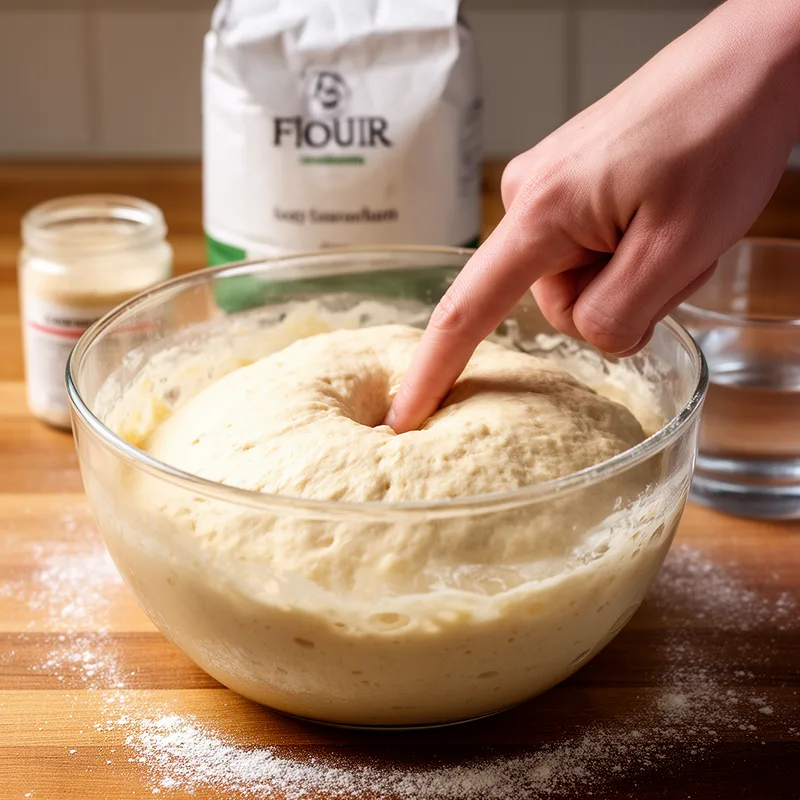
yeast dough
- noun
- /jiːst doʊ/
- The baker carefully shaped the yeast dough into rolls before letting them rise on the counter.
- sweet yeast dough
Examples
-
It was when he was scalding the milk for the yeast dough.
Fiction book (1993) -
Down the arcade, a peaceful line had formed where an old woman was frying balls of yeast dough in oil.
Academic text (1990) -
There were buns made with a sweet yeast dough and filled with jam or studded with currants.
Fiction book (1992) -
You need to knead the yeast dough thoroughly to help it rise properly.
-
To make the pizza crust, we prepared a simple yeast dough that would rise during baking.
Synonyms

 199
1.2
199
1.2

A thick mixture of flour and water that you knead to make bread or pastry
 2
1.2
2
1.2
A soft mixture of flour and water used to make bread
How Light

Surface Forms
Morphology
The meaning 'dough made with yeast' is directly and compositionally derived from combining 'yeast' (a leavening fungus) with 'dough' (a flour mixture). This noun + noun construction is transparent and cross-linguistically common, so a B1 learner who knows both constituents will readily infer the MWE's meaning.
Etymology
The noun yeast dough is dough made with tiny living yeast that eat sugars and make gas bubbles, so the dough puffs up. That's why yeast dough means dough that 'rises' and becomes light for bread and pastries.