

unleavened
 1
6.5
1
6.5

- adjective
- /ʌnˈlɛvənd/
- The unleavened bread symbolizes their sacrifices.
- unleavened bread
Examples
-
During Passover, many families eat unleavened bread to commemorate their ancestors' escape from Egypt.
-
Why do we eat matzah, the unleavened bread?
-
But I have yet to master the making of unleavened bread like you have.
-
Now came the days of unleavened bread.
-
A trencher was a dinner plate made of flat, unleavened bread.
Blog text (24) -
The family ate almost nothing but unleavened bread made with a mixed-grain flour containing corn.
Academic text (1992) -
The bitter herbs, the unleavened bread, and the salt water are laden with symbolism, and the service is exactly the same as it has been for centuries.
Academic text (1996) -
This year, Shimeon Bar-Adonijah had presented the elements of the Passover meal: "The lamb, the unleavened bread, and the bitter herbs of the Passover have as much meaning for us as for our Jewish brothers and sisters."
Fiction book (1998) -
The mighty legions marched in the very footsteps of devout pilgrims who came from every corner of the Jewish nation to worship and celebrate the high holy days of the Feast of the Unleavened Bread, the Passover.
Fiction book (1998) -
The recipe called for unleavened bread, which is traditionally made without any yeast.
Synonyms

Bread made without yeast or baking powder that stays flat
Antonyms

Compounds
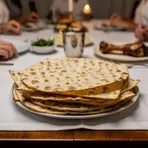

An eight-day Jewish festival in spring that remembers the Israelites leaving Egypt
How Leavened

Surface Forms
Morphology
Etymology
Unleavened breaks into un- 'not' and leaven 'to raise', and leaven is like the word elevate, which means 'to lift'. So unleavened means bread that has not been 'raised' by yeast or baking powder and stays flat.