
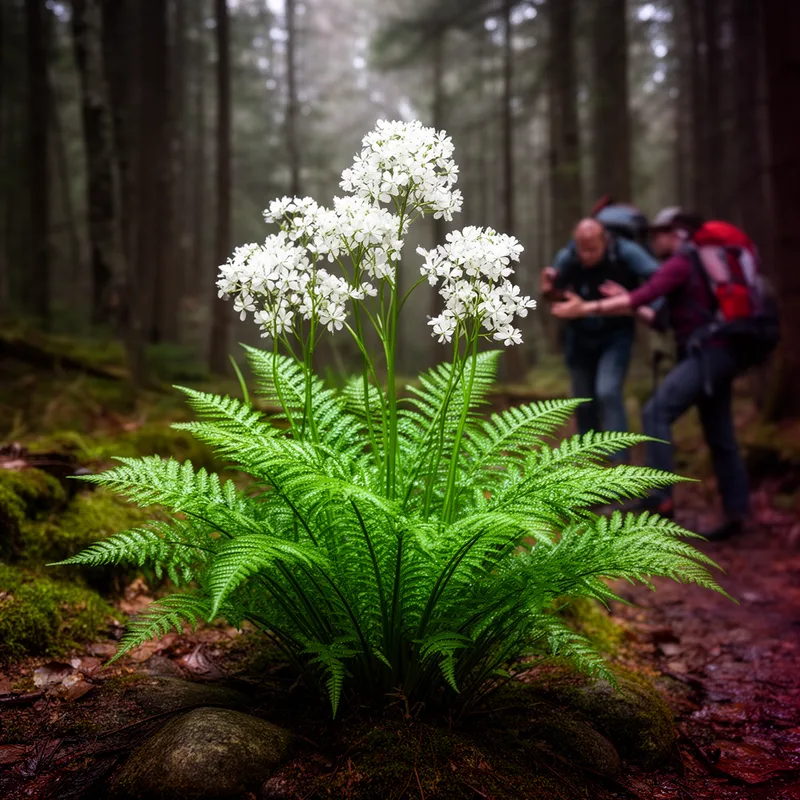
winter fern
- noun
- The winter fern thrives in damp woodlands across Eurasia and parts of North America.
Examples
-
Many hikers avoid touching the winter fern because of its toxic properties.
-
Many gardeners avoid planting winter ferns due to their toxicity.
-
Despite its attractive appearance, every part of the winter fern is dangerous if ingested.
-
The winter fern is known for its delicate appearance.
-
Despite its attractive appearance, every part of the winter fern is dangerous if ingested.
-
Many hikers avoid touching the winter fern because of its toxic properties.
-
Many gardeners avoid planting winter ferns due to their toxicity.
Synonyms


 1
8.8
1
8.8
A tall poisonous plant with fern-like leaves and clusters of white flowers

A large plant with leaves like a fern, small white flowers, and all parts very poisonous if eaten
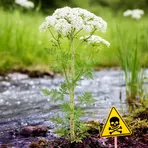
A very poisonous European and African plant with fernlike leaves and white flower clusters in damp places

A plant with large fern-like leaves that is very poisonous and grows in wet places

A tall very poisonous plant with leaves like a fern and small white flowers

A tall plant with fernlike leaves and white flowers that can make animals or people very ill
Surface Forms
Morphology
The compound 'winter fern' is a straightforward noun–noun combination where 'winter' (the cold season) modifies 'fern' (a plant), so the phrase denotes a plant with fernlike characteristics associated with winter. This is a compositional, non-idiomatic formation following common cross-linguistic compound patterns, so a B1 learner who knows both constituents can infer the basic meaning.
Etymology
Winter fern may get its name from its fern-like leaves, which explain the fern part, and from appearing late in the year or staying green in cold months, which explain the winter part. Because it 'looks like a fern' but is 'poisonous', the name helps you remember to avoid touching or eating it.