
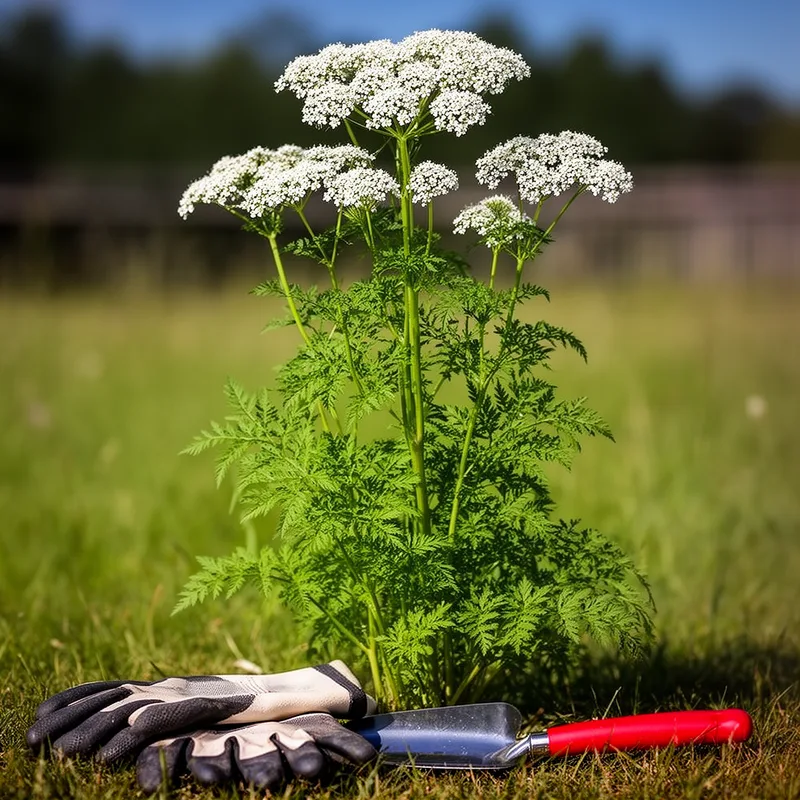
poison hemlock
- noun
- /ˈpɔɪzən ˈhɛmˌlɑk/
- When walking through the woods, it is important to recognize poison hemlock, as it is highly toxic to humans.
Examples
-
And all plants we have shunned: poison hemlock, pigweed, bindweed, stinging nettle, bull thistle.
Academic text (1994) -
In the garden, we found several plants of poison hemlock, which can be lethal if ingested.
-
Actually, poison hemlock is not uncommon in our area of the woods.
Blog text (32) -
Poison hemlock can be quite deadly even if touched and the hand is put to the mouth, etc.
Blog text (32) -
Poison hemlock
Blog text (29) -
Exotic species, notably Scotch broom, poison hemlock, and forget-me-nots, have invaded from the less well-maintained state park, despite efforts to eradicate them.
Academic text (1994) -
Local wildlife experts warn that poison hemlock often grows near rivers and streams, making it a serious hazard for children.
Synonyms


 1
8.8
1
8.8
A tall poisonous plant with fern-like leaves and clusters of white flowers
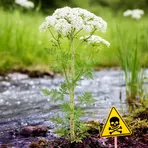
A very poisonous European and African plant with fernlike leaves and white flower clusters in damp places

A tall plant with fernlike leaves and white flowers that can make animals or people very ill
How Toxic
 2
3.5
2
3.5
Surface Forms
Morphology
The phrase is a straightforward noun–noun combination where 'poison' (a harmful substance) modifies 'hemlock' (a type of plant), so a learner who knows both words can infer it refers to a poisonous hemlock plant. This modifier+head composition is cross-linguistically common and not idiomatic, making the meaning directly derivable from the constituents.
Etymology
Poison hemlock comes from a real, tall plant that is deadly. The word hemlock was the name of that plant, and one famous story says Socrates drank it and 'died', so the name now means 'very poisonous'.