
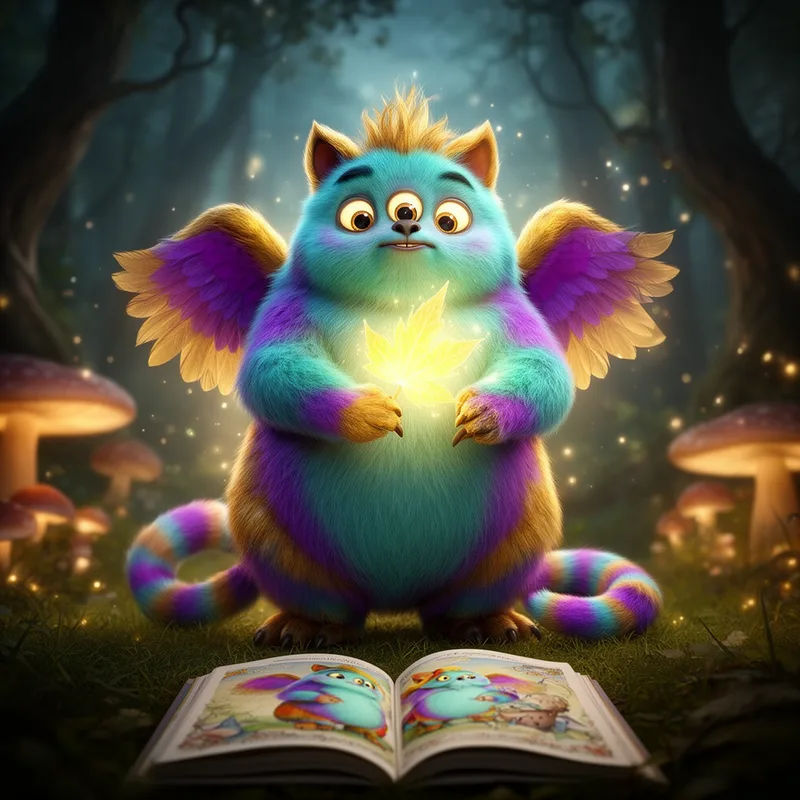
whangdoodle


 1
9.9
1
9.9
- noun
- /ˈwæŋˌduːl/
- Archaic
- Hornswogglers and snozzwangers and those terrible, wicked whangdoodles.
Examples
-
The author's new book features a colorful whangdoodle that helps kids solve problems.
-
The old man told a tale about a mischievous whangdoodle that lived in the forest.
-
In the story, the children imagined a friendly whangdoodle who loved to play games.
Synonyms
 417
2.7
417
2.7
A small imagined being that looks like a person and has magic
 105
8.3
105
8.3
A small, ugly creature that causes trouble for people

A person in a story who is amusingly odd and playful

An imaginary creature people blame as a joke for a sudden noisy sound like a fart

An animal that only appears in stories and myths, not in real life

A creature from North American stories said to be strange and scary
Compounds



- Archaic
A very impressive, exciting performance that people remember
How Real
- Literature
1
7.0
 4
5.9
4
5.9
- Archaic
1
9.9
33
6.4
Surface Forms
Etymology
Whangdoodle is a playful made-up name likely built from whang (a loud 'bang' or 'hit') and doodle (a small, silly 'drawing'). A helpful way to remember it is to picture a noisy, odd creature in a children's story, which is why it means a fanciful imaginary animal.