
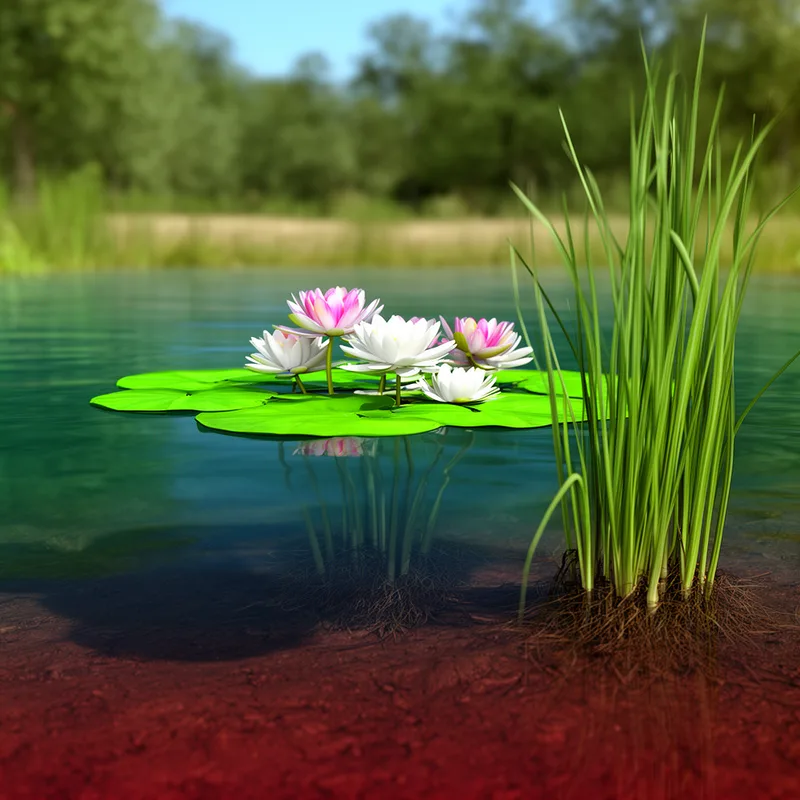
water plant
 2
2.2
2
2.2

- noun
- /ˈwɔːtər plænt/
- Just to keep their bodies warm, they have to eatmore than 100 pounds of water plants a day.
- reproduction in water plants
Examples
-
The high proportion of white flowers in water plants may enhance fitness by making flowers more conspicuous to pollinators.
Academic text (1996) -
In a dented old galvanized tub filled with water and handfuls of green algae and other water plants, the eggs changed.
Fiction book (1990) -
Yet it is inappropriate to dismiss the importance of sexual reproduction in water plants.
Academic text (1996) -
Water plants alone were not enough to allow GBI to establish its PBF product line.
Fiction book (2001) -
Vegetative propagules have been instrumental in the dispersal of water plants by people.
Academic text (1996) -
Many fish species thrive when there are plenty of water plants in the pond.
-
The garden center offers a wide selection of water plants for creating beautiful aquatic landscapes.
-
Adding water plants to your aquarium can help maintain water clarity and provide hiding places for fish.
Synonyms
 1
3.4
1
3.4
A plant that grows in or near water, like a water lily

A plant that grows in water, like water lilies or reeds

A plant that lives in water or very wet ground
How Aquatic

Surface Forms
Morphology
The meaning 'a plant that lives in water' is directly and compositionally derived from combining 'water' (the liquid/habitat) with 'plant' (a photosynthetic organism); the first noun functions attributively to indicate habitat. This is a common, predictable noun-noun compounding pattern and is cross-linguistically transparent, so a B1 learner who knows both words will readily infer the meaning. (Although in technical contexts 'water plant' can sometimes refer to a facility that treats or supplies water, the provided definition and example make the aquatic-plant reading clearly compositional.)
Etymology
Water plant is a simple name made from water and plant to describe a plant that lives in or on water, like lilies floating on a pond or reeds with roots in the mud. That's why it means 'a plant that lives partly or entirely in water'.