

wasting
- noun
- /ˈweɪstɪŋ/
- Specialized
- You can see the ribs sticking out, very thin arms, very thin fingers, wasting of the face.
Loading YouTube…
Watch on YouTubeHe'd he'd added wasting hunger, squalor, filth of his body.
- He'd he'd added wasting hunger, squalor, filth of his body.
Examples
-
It's not known why in some people it's a fulminant disease, but in others a slow wasting process.
-
In fact, Rachel, when might you expect to see some wasting in children?
-
Niklas Roy calls it his Perpetual Energy Wasting Machine, but we know it for what it truly is: a building-sized, most useless machine.
Blog text (14) -
In "Wasting," the divine flesh is presented as addictive, and the speaker offers a plaintive cry, "I Need Thee, O my Food, / O Christ," explaining that she will die without divine nourishment (ll. 1-2).
Academic text (2016) -
Jakle, J. A., and D. Wilson. 1992. Derelict Landscapes: The Wasting of America's Built Environment. Savage, Md.: Rowman & Littlefield.
Academic text (2012) -
The predicted cataclysm, the Wasting, has come and, it seems, gone: pollution, exhaustion, and inevitable wars among swollen, impoverished populations have devastated the world, leaving it to the wild weeds.
Blog text (32) -
The doctor explained that the patient's wasting was due to severe malnutrition.
-
After months of illness, she experienced significant wasting and had lost much of her strength.
-
Signs of wasting can include noticeable weight loss and weakness in the affected individual.
Synonyms

 12
8.5
12
8.5

A gradual loss of muscle or body tissue from not being used
 2
7.5
2
7.5
Parts of the body slowly become smaller because of disease or lack of use
 1
8.6
1
8.6
Extreme thinness from not enough food or illness

A severe loss of weight, muscle, and strength during a long illness

Loss of muscle that gets worse over time, often from nerve damage

A very thin, weak body caused by illness or lack of food

A severe loss of weight and strength in body and mind from a long illness
Antonyms

Compounds

- Specialized
4
7.3
A disease that makes a person lose weight and become weak, often affecting the lungs
- Specialized
2
6.0
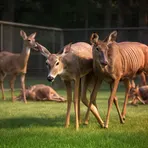
A contagious disease that affects deer and elk, causing slow weight loss and strange behavior

How Severe

Surface Forms
Morphology
Etymology
Wasting comes from the simple word waste, which originally meant 'to make empty' and comes from Latin vastus meaning 'empty'. So, wasting describes the body being slowly 'used up' or emptied of tissue and strength.