

wagon
 37
5.9
37
5.9

- noun
- /ˈwæɡən/
- US
- If someone else had said that outside the hall, he'd be in the back of a police wagon now with the Secret Service questioning him.
Examples
-
The outlaw was taken to the back of the wagon and pushed inside.
Fiction book (1993) -
The officer loaded the suspect into the wagon to take him to the station.
-
Spot, Kid Diamond and other leaders and drag them into the wagon and take them away.
Fiction book (1992) -
"Get him into the wagon." "What are you going to do?" Julie said.
Fiction book (1993) -
I was put in the paddy wagon, and I was taken down to the tombs.
-
With old-fashioned courtesy, he held the door of the paddy wagon open for the policeman who booked him.
Academic text (2001) -
After the arrest, they placed him in the back of the police wagon for transport.
-
The detectives arrived in a police wagon to transport the suspect for questioning.
Synonyms
 5
8.2
5
8.2
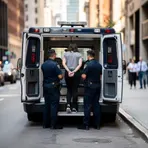
A police van that carries prisoners
 5
1.6
5
1.6
A van police use to carry people they have arrested
 1
3.3
1
3.3
A van police use to carry people they arrest

A police van used to carry prisoners
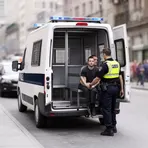
A van used by police to carry arrested people
Idioms




Compounds
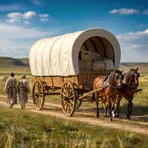 5
5.6
5
5.6
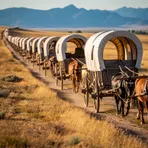
A large wooden wagon with a curved cloth cover used by people to travel across open land
 4
5.2
4
5.2
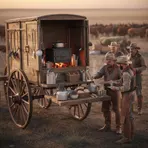
A group or service that brings gifts and information to people who just moved into a neighborhood


- Archaic

 1
9.9
1
9.9
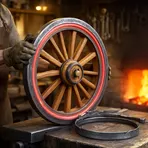
A large covered wagon with broad wheels used by 1800s American pioneers to carry goods



A large covered wagon with wide wheels used by settlers to travel across the plains


Surface Forms
Etymology
The word wagon comes from old English wægn and old German wagen, meaning 'vehicle' or 'that which moves'. Since it long meant a vehicle that carries people or goods, a police van used to move prisoners is also called a wagon.