

voidness
 3
9.9
3
9.9

- noun
- /ˈvɔɪdnəs/
- Formal
- Meditation often helps practitioners grasp the concept of voidness, which leads to a deeper understanding of existence.
Examples
-
Philosophers frequently discuss voidness to illustrate ideas of emptiness in their theories about reality.
-
In each sadhana, there will be a slightly different method of meditating on voidness.
Blog text (6) -
Question: If one really understood voidness, then would the chair no longer hold us?
Blog text (6) -
We still have an understanding of voidness, but we're not totally absorbed in it.
Blog text (6) -
And the more that we see voidness, the more compassionate we become?
Blog text (6) -
We take as the principal discriminating awareness the awareness of voidness.
Blog text (6) -
When you focus on voidness, there's no appearance of true existence.
Blog text (6) -
Wisdom, discriminating awareness, is the same—the understanding of the voidness of all phenomena.
Blog text (6) -
The teachings emphasize that recognizing voidness is essential for overcoming attachments and desires.
Synonyms
 216
2.1
216
2.1
A lack of someone or something that should be there
 182
6.5
182
6.5
A very empty space or feeling that is hard to fill
 58
5.3
58
5.3
A feeling that life has no meaning
 32
7.2
32
7.2
A state with no people or things in it
 5
7.0
5
7.0
A state in which something is not there
 4
4.3
4
4.3
A feeling of emptiness with no thoughts or emotion


 1
9.9
1
9.9
A calm inner state with no strong thoughts or wants
 1
9.8
1
9.8
The state of not existing
 1
9.2
1
9.2
A state of being empty of meaning and thought

A lack of being real, strong, or convincing

A state in which nothing exists
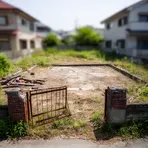
A situation when something does not exist

An empty space with nothing inside
Antonyms

Surface Forms
Morphology
Etymology
Voidness comes from the word void, from Latin vacuus meaning 'empty', plus the suffix -ness that makes a noun. You can see the same root in vacant and vacuum. So in philosophy it means the state of being without its own independent existence, which is why thinkers use 'voidness' for the empty or unfixed nature of things.