
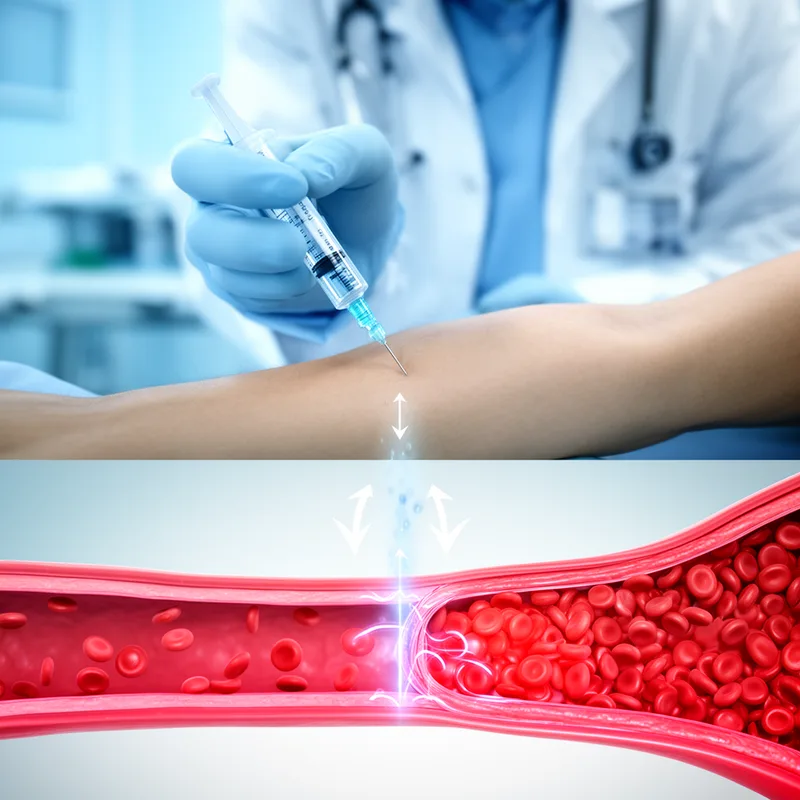
vasoconstrictive
- noun
- /ˌveɪzoʊkənˈstrɪktɪv/
- Specialized
- It has been suggested that nasal perforations in cocaine users are caused by ischemia due to the vasoconstrictive effect of the drug.
Examples
-
The vasoconstrictive properties of epinephrine help improve visibility and therefore facilitate disease eradication.
Academic text (2001) -
Other conditions, including emboli, hemostatic abnormalities, trauma, and the use of vasoconstrictive drugs, may produce symptoms mimicking RP 1.
Academic text (2007) -
He was not taking any vasoconstrictive drugs.
Academic text (2007) -
-Yeah, vasoconstrictive agents.
-
-Vasoconstrictive.
-
Although the substantial reduction in sudden death was not significant, the results imply that aspirin may prevent sudden occlusion through inhibition of the proaggregatory and vasoconstrictive thromboxane A2.
Academic text (1992) -
Caffeine is known to be a vasoconstrictive substance that can temporarily raise blood pressure.
-
The study revealed that certain vasoconstrictive agents are effective in treating severe hypotension.
-
Doctors often prescribe vasoconstrictive medications to control bleeding during surgery.
Synonyms
 4
9.9
4
9.9

A substance that narrows blood vessels to raise blood pressure
 1
8.1
1
8.1
A drug that makes blood vessels get smaller and raises blood pressure


 1
7.3
1
7.3
Something, like a drug, that makes blood vessels narrow and raises blood pressure
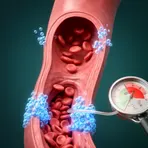
A chemical that makes blood vessels narrower and raises blood pressure
A drug that narrows blood vessels and raises blood pressure
Surface Forms
Morphology
vasoconstrictive = vasoconstrict (semi-transparent) = vaso + constrict + ive
The term 'vasoconstrict' is derived from 'vaso' (blood vessels) and 'constrict', but the specific medical application might not be immediately clear to all learners.
Etymology
Vasoconstrictive is made of vaso- ('vessel', a tube for blood) and constrict ('to make tight' or 'narrow'), the same idea you see in restrict. So a vasoconstrictive is something that makes blood vessels narrow and raises blood pressure.