
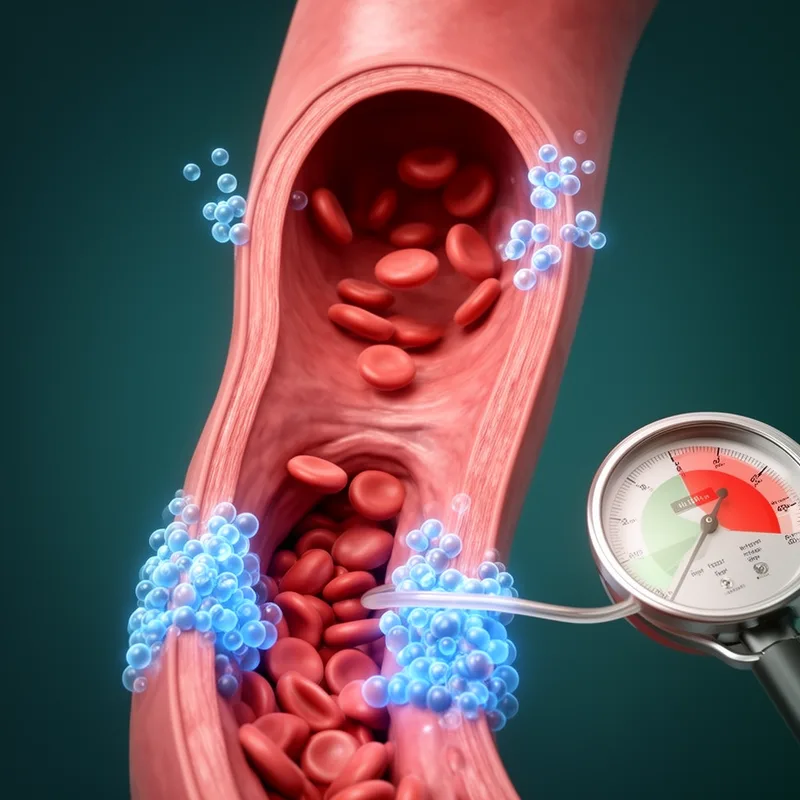
angiotonin
- noun
- /ˌæn.dʒi.oʊˈtoʊ.nɪn/
- Specialized
- The doctor explained that angiotonin plays a crucial role in regulating blood pressure.
Examples
-
The presence of angiotonin in the bloodstream can result in an increase in blood pressure.
-
High levels of angiotonin can lead to hypertension.
-
Doctors may administer angiotonin to patients experiencing dangerously low blood pressure.
-
Scientists are studying the effects of angiotonin on cardiovascular health.
-
The presence of angiotonin in the bloodstream can result in an increase in blood pressure.
-
Doctors may administer angiotonin to patients experiencing dangerously low blood pressure.
-
High levels of angiotonin can lead to hypertension.
Synonyms

 1
8.1
1
8.1

A drug that makes blood vessels get smaller and raises blood pressure


 1
7.3
1
7.3
Something, like a drug, that makes blood vessels narrow and raises blood pressure
 1
8.9
1
8.9
A hormone that makes blood vessels narrow and raises blood pressure

A drug that narrows blood vessels and raises blood pressure

A hormone in the body that makes blood vessels smaller and raises blood pressure
A protein made by cells that makes blood vessels narrow and raises blood pressure
Antonyms

Surface Forms
Morphology
angiotonin = angio + tonin
The word is built from technical combining forms ('angio-' and '-tonin') that are not standalone, familiar English words, so an average B1 learner cannot reliably infer the meaning from known base words.
Etymology
Angiotonin combines angio- meaning 'vessel' and -tonin related to 'tone' or 'tension', just like the English word tone. So, angiotonin is a substance that makes blood vessels tighten and thus raises blood pressure.