

vaporization


 1
5.6
1
5.6
- noun
- /ˌveɪpəraɪˈzeɪʃən/
- Specialized
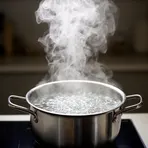
- Vaporization occurs when a liquid reaches its boiling point and transforms into gas.
- heat of vaporization
- vaporization of tissue
- laser vaporization
Loading YouTube…
Watch on YouTubeIt's the volume of vaporization or freezing and so on of the pure substance.
- It's the volume of vaporization or freezing and so on of the pure substance.
Examples
-
When we did the vaporization, we were going from liquid to gas.
-
The three surgical effects of the laser beam are tissue cutting, tissue coagulation, and tissue vaporization.
Academic text (1995) -
CO2 laser energy is absorbed by water, and the laser is very precise for cutting and for superficial vaporization of tissue.
Academic text (2008) -
In 1986, the French surgeon Kamami used a CO2 laser for a procedure initially called laser vaporization of the palatopharynx.
Academic text (1999) -
In patients with recurrent hemorrhage from a varicose vessel or with voice dysfunction resulting from small vessel enlargement, vaporization of the abnormal vessels is indicated.
Academic text (1996) -
The vaporization of the ice turned it into water vapor, demonstrating a key scientific process.
-
During the experiment, we observed the vaporization of the solution as it heated up.
Synonyms
 1
4.0
1
4.0
Gas produced when a liquid, like water, heats and rises into the air
Antonyms

Compounds

- Specialized
Amount of heat needed to turn a liquid into steam without raising its temperature
How Much Gas
- Specialized
3
7.3

- Specialized
1
8.5
- Specialized
1
5.6
- Specialized
15
3.2
Surface Forms
Morphology
Etymology
Vaporization comes from the Latin word vapor, meaning 'steam' or 'mist', and the ending -ization, which means 'the act of making'. So vaporization is simply the process of turning a liquid or solid into steam or a gas.