
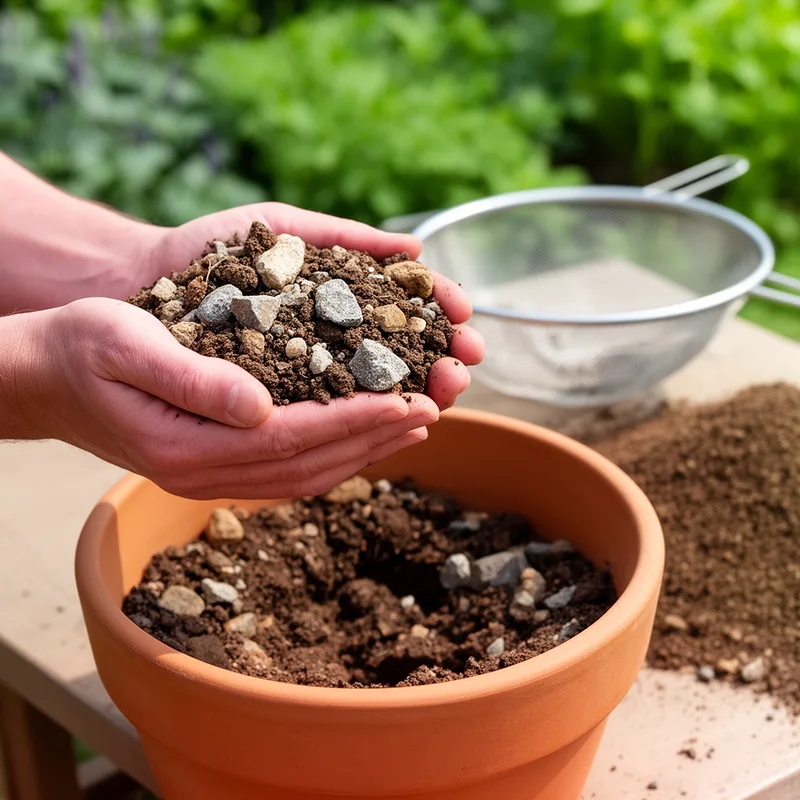
unsifted soil
- noun
- The gardener prefers to remove clumps and stones from unsifted soil before filling pots.
Examples
-
You shouldn't use unsifted soil for planting flowers because it may contain rocks or debris.
-
Some seeds struggle to grow well when planted in unsifted soil due to poor aeration.
-
The gardener prefers using unsifted soil for planting.
-
We found unsifted soil in the backyard.
-
Some seeds struggle to grow well when planted in unsifted soil due to poor aeration.
-
You shouldn't use unsifted soil for planting flowers because it may contain rocks or debris.
-
The gardener prefers to remove clumps and stones from unsifted soil before filling pots.
Surface Forms
Morphology
The meaning is directly compositional: 'unsifted' = not sieved and 'soil' = earth, so the phrase literally denotes soil that has not been passed through a sieve. This adjective+noun combination is literal and cross-linguistically common, so a B1 learner who knows both constituents would readily understand it.
Etymology
Unsifted soil is a simple, literal name: unsifted means 'not passed through a sieve' and soil means dirt, so this soil still has clumps, stones and plant bits. That's why the term refers to soil that has not been cleaned and can make planting harder.

