
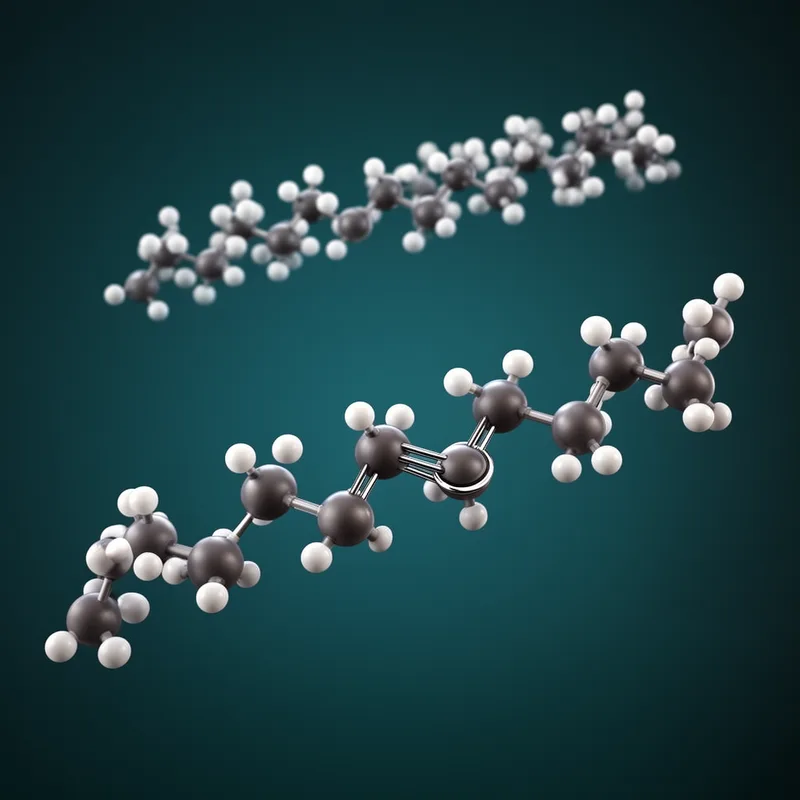
unsaturation
- noun
- /ˌʌnˈsætʃəˌreɪʃən/
- Specialized
- Chemists analyze the degree of unsaturation to determine the structure of organic compounds.
Examples
-
The unsaturation of fatty acids affects their melting point and nutritional properties.
-
The unsaturation in the fatty acids affects their properties.
-
Oils with higher unsaturation are generally considered healthier for cooking.
-
High levels of unsaturation can lead to increased reactivity.
-
The unsaturation in the fatty acid allows it to remain liquid at room temperature.
-
Chemists often study the impact of unsaturation on the reactivity of organic molecules.
-
High levels of unsaturation in a compound can lead to increased instability and reactivity.
Surface Forms
Morphology
unsaturation = unsaturated (semi-transparent) = un + saturate + ion
Formed regularly from 'unsaturated' + '-ion', but the chemistry-specific meaning ('presence of double or triple bonds') is technical and may not be inferable by a general B1 learner.
Etymology
Unsaturation comes from un- 'not' plus saturation, from a root that means 'to fill'. In chemistry, unsaturation means a molecule is 'not full' of hydrogen because double or triple bonds leave room where more hydrogen could join.

