

unproportioned


 1
7.2
1
7.2
- adjective
- /ˌʌnprəˈpɔrʃənd/
- Her dress appeared unproportioned, with a top that was much larger than the skirt.
Examples
-
Give thy thoughts no tongue, nor any unproportioned thought his act.
-
Give thy thoughts no tongue, nor any unproportioned thought his act.
-
Give thy thoughts no tongue, nor any unproportioned thought his act.
-
The sculpture looked unproportioned, with an oversized head and tiny legs.
-
The building's design was criticized for being unproportioned and awkward in appearance.
Synonyms
 47
5.9
47
5.9
Too large or small compared with what is fair
 1
6.7
1
6.7
Being too large or too small compared with something else

Having parts of different sizes so it looks unbalanced

A thing with parts that do not match in size or shape

Not matching in amount or size
Antonyms
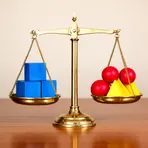
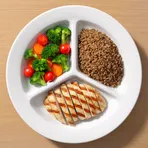
How Proportioned
1
4.1
 1
3.7
47
5.9
1
7.2
14
4.7
1
3.7
47
5.9
1
7.2
14
4.7
Surface Forms
Morphology
unproportioned = proportioned (transparent) = un + proportion + ed
The adjective is formed by prefixing 'un-' (not) to 'proportioned' and directly negates having proportion, a straightforward derivation.
Etymology
Unproportioned breaks into un- 'not' and proportion, which comes from portion 'part'. So think of it as 'parts not the right size', which is why it describes something that is not balanced in shape or size.