
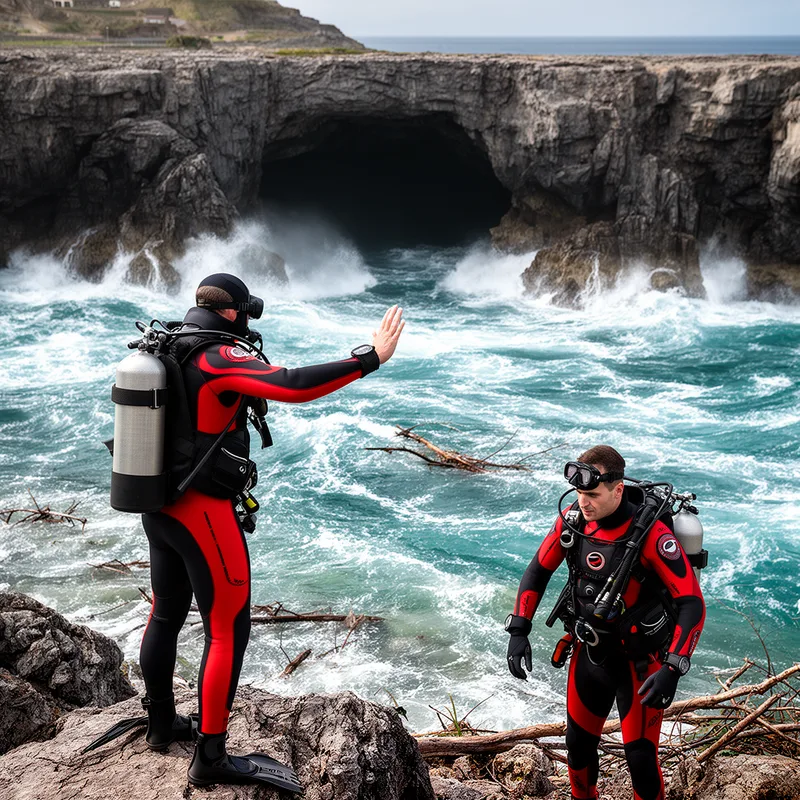
undivable
- adjective
- /ʌnˈdaɪvəbl/
- After the storm, debris made the pool undivable until it could be cleaned.
Examples
-
Due to strong currents, the underwater cave was declared undivable by the rescue team.
-
The lake was too shallow and rocky, making it completely undivable for anyone.
-
The water is undivable due to the strong currents.
-
This area is undivable because of the rocky bottom.
-
The water was so murky that it was completely undivable for safety reasons.
-
Due to strong currents and debris, the river was deemed undivable by the lifeguards.
-
After the storm, the ocean became too rough and undivable for inexperienced swimmers.
Synonyms

 28
7.9
28
7.9

Not able to be reached, used, or understood
 19
7.3
19
7.3
Not possible to enter or go through
 13
5.3
13
5.3
A road, path, or area you cannot travel through
 1
7.1
1
7.1
Hard to reach because it is far away or blocked


 1
7.7
1
7.7
So strong that no one can break into or get past it
 1
6.9
1
6.9
A road or path that people cannot cross
 1
9.1
1
9.1
Not possible to cross by people or vehicles

Not able to be crossed by walking or driving through shallow water

Impossible to travel through because obstacles block the way
How Safe

Surface Forms
Morphology
undivable = divable (transparent) = un + dive + able
Literal negation of 'divable' (able to be dived into); the physical sense is a straightforward compositional negative.
Etymology
The word undivable comes from the parts un- 'not', dive 'to jump into water', and -able 'able to'. So a place that is undivable is one you should not dive into because it is too shallow, rough, or dangerous.