

dangerous
 ∞
1.5
∞
1.5

- adjective
- /ˈdeɪndʒərəs/
- That's a thumb drive, and it contains the names of the members of one of the most dangerous terrorist organizations in the United States.
- too dangerous
- more dangerous
- most dangerous
Loading YouTube…
Watch on YouTubeAnd they think that that's less dangerous then Trump.
- And they think that that's less dangerous then Trump.
- I think Donald Trump is a dangerous maniac.
- Because they're both very dangerous lads like Rockhold.
- That's what's so dangerous about some red flags.
- They are the most dangerous threat to any country.
- And that's a dangerous process to be in.
- Mark my words, AI is far more dangerous than Nuke's far.
- So it's a dangerous thing to stand out.
- For Britain, it was dangerous to go to India.
- This is a very, very dangerous moment in the war.
- But radiation is much less dangerous than than you'd think.
Examples
-
This is a very, very dangerous moment in the war.
-
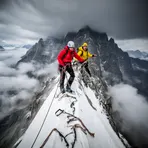
Climbing that mountain without proper gear can be very dangerous.
-
Now where it gets really dangerous is with kids.
-
For Britain, it was dangerous to go to India.
-
Do you have any idea how dangerous that is?
-
Or you will be treated as a dangerous political enemy.
-
So what is the most dangerous moment in dating?
-
Year in, year out, COVID has made a dangerous job even worse.
-
As his father had said, the spreading was dangerous because it robbed people of food.
Fiction book (1990) -
Sri Lanka is one of the most dangerous places in the world to be a reporter.
Academic text (2011)
Synonyms
 ∞
1.0
∞
1.0
Likely to cause harm or injury
 ∞
2.7
∞
2.7
Likely to cause great harm or danger
 543
2.8
543
2.8
Able to cause death or serious harm
 269
3.6
269
3.6
Likely to cause loss, harm, or danger
 161
2.6
161
2.6
Causing damage to people, animals or things
 98
5.2
98
5.2
Likely to cause harm or danger
 93
1.1
93
1.1
Likely to cause harm to people or damage to things
 66
4.3
66
4.3
Dangerous enough to cause death
 65
3.6
65
3.6
Showing that something bad or dangerous may happen
 43
7.5
43
7.5
Full of danger that could cause harm
 38
7.1
38
7.1
Unstable ground, water, or weather that can suddenly become dangerous
 30
8.5
30
8.5
Likely to be risky or dangerous because the outcome is uncertain
 8
7.0
8
7.0
Can harm people, animals, or plants
Antonyms

Compounds


How Dangerous

Surface Forms
Morphology
Etymology
Dangerous comes from the noun danger, which long ago meant 'power' or the 'ability to harm'. So something dangerous is something that has the 'power' to hurt you.