

trisomy
 1
9.6
1
9.6

- noun
- /ˈtraɪsəmi/
- Specialized
- Many are associated with Turner syndrome, Noonan syndrome, and the trisomies.
- trisomy 18 syndrome
- newborns with trisomy
- trisomy 18
Loading YouTube…
Watch on YouTubeAnd they look at mutations, genotypic mutations for things like, you know, trisomies and aneuploidies, all, all the stuff you don't want.
- And they look at mutations, genotypic mutations for things like, you know, trisomies and aneuploidies, all, all the stuff you don't want.
Examples
-
A baby with trisomy 21 may have developmental delays and characteristic features.
-
While trisomy 16 is the most common in miscarriages, trisomy 21 (Down syndrome) is seen with considerable frequency.
Academic text (2004) -
Our close friends had a daughter with trisomy 18 who died after a little under a year.
Blog text (14) -
I had a brother with trisomy 18 when I was eight.
Blog text (15) -
How else is one supposed to be certain that the requirement not to provide surgery, nutrition, or hydration for newborns with trisomy 18 syndrome is, as Rauprich suggests, an instance of the best interest principle?
Academic text (2016) -
And they look at mutations, genotypic mutations for things like, you know, trisomies and aneuploidies, all, all the stuff you don't want.
-
The notion that increased APP synthesis can lead to excess Beta/A4 production and that this has a role in the pathogenesis of Alzheimer's disease is supported by the finding that people with trisomy 21 (Down's syndrome), who have a high frequency of Alzheimer's disease, have an extra copy of the APP gene.
Academic text (1992) -
Doctors explained that trisomy occurs when an extra chromosome is present in the cells.
-
Many children with trisomy face various health challenges due to the chromosomal abnormality.
Synonyms
 1
6.1
1
6.1
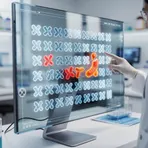
A change in the number or shape of chromosomes that often causes health problems
 1
6.7
1
6.7
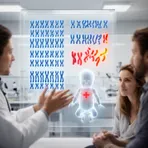
A change in the number or shape of chromosomes that often causes health problems


 1
9.9
1
9.9
An abnormal number of chromosomes in a cell that is not the usual amount
 1
8.9
1
8.9
A change in the usual number or shape of chromosomes that often causes physical and mental problems
 1
5.3
1
5.3
A health condition caused by a change in chromosomes that can affect the body or mind

A condition in which body cells have extra chromosomes that cause genetic problems
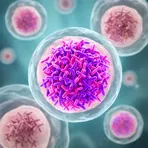
A cell with more chromosomes than a normal body cell has
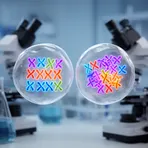
A condition in which an organism has a different number of chromosomes than normal for its species
Compounds

- Specialized
A condition present at birth caused by an extra 21st chromosome that affects learning and development
Surface Forms
Morphology
trisomy = soma (opaque) = tri + somy
A specialized medical combining form: knowing 'tri-' (three) and 'soma' (body) does not make the specific meaning 'an extra chromosome' clear to an average B1 learner.
Etymology
Trisomy comes from the parts tri- meaning 'three' and -somy from Greek soma meaning 'body'. So in genetics a trisomy is when there are three copies of one chromosome in a cell, which explains why it means an extra chromosome.