
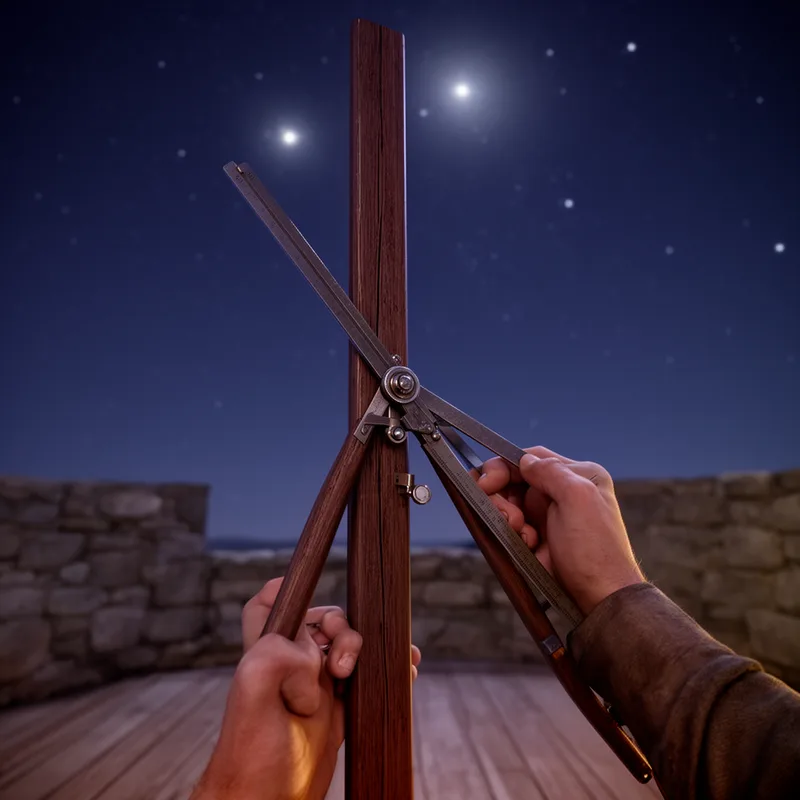
triquetrum
- noun
- /traɪˈkwɛtrəm/
- Archaic
- With the help of a triquetrum, ancient scientists could measure the altitude of stars.
Examples
-
He explained how the triquetrum was an important tool before the invention of the telescope.
-
The museum displayed a rare triquetrum used by astronomers in the Middle Ages.
-
The triquetrum was essential for navigation at sea.
-
Can you explain how a triquetrum works?
-
The museum displayed a rare triquetrum used by astronomers in the Middle Ages.
-
With the help of a triquetrum, ancient scientists could measure the altitude of stars.
-
He explained how the triquetrum was an important tool before the invention of the telescope.
Synonyms
 2
9.9
2
9.9

An old instrument used to measure how high stars are and find direction at sea

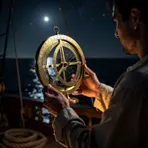
A metal set of hoops that shows where stars are in the sky

An old instrument sailors used to measure angles to the sun or stars up to 45 degrees
A tool that measures the angle between two distant stars
Compounds

- Specialized
A small bone in the wrist that connects to the pisiform, hamate, and lunate bones
How Advanced
- Specialized

 1
9.9
1
9.9

- Specialized
4
9.5
- Archaic
2
9.9
- Specialized
10
7.5
- Archaic
Surface Forms
Etymology
Triquetrum comes from Latin parts like tri- 'three' and a word for 'corner', because the old astronomical instrument had three arms to measure angles, so its name describes its three-part design.