
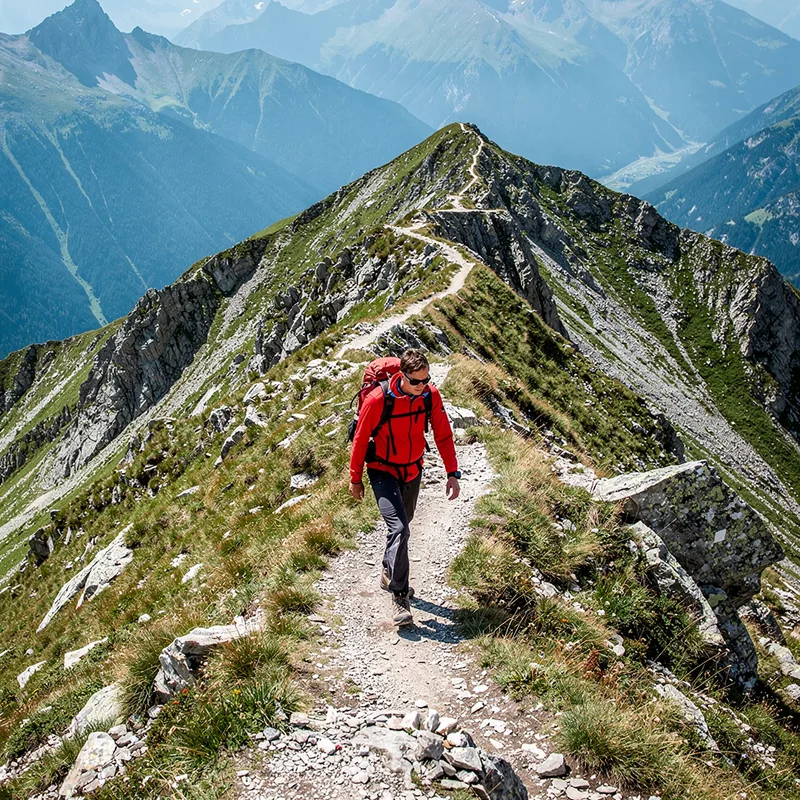
to traverse
 16
5.6
16
5.6

- verb
- /trəˈvɜrs/
- You see, the terrain is easy to traverse.
- traverse long distances
- traverse boundaries
- traverse paths
Loading YouTube…
Watch on YouTubeAnd so and so traverses, gun in hand, the Creek.
- And so and so traverses, gun in hand, the Creek.
- So talk a little bit about your experience traversing that part of of the country.
- They go immediately, like, so then they start traversing through this, this, this disgusting place, right?
- The Darien Gap is a very difficult piece of habitat to traverse if you know what you're doing.
- If I make it back to my office, traversing these icy sidewalks, I could go back.
- At the end of the session, just stay in the wall for half an hour and just traverse around, find knee bars, find rest.
- It is this loop that that kind of traverses Southern Colorado, San Juan, San Juan range.
- It's all those places in your life you did not traverse properly, right?
- So we'll actually never traverse this last edge here of the cycle.
Examples
-
Invite students to traverse boundaries, bringing into school the texts of their lives.
Academic text (2013) -
The fleet could not traverse the channel unless it had been cleared first.
-
You should have seen the river I had to traverse this morning.
-
No matter where you start, you cannot traverse all those bridges.
-
Having gone around it by air, I yearn now to traverse it by sea.
Academic text (2008) -
In his entire life, Hector will traverse no more than ten square miles of it.
Fiction book (1993) -
He was the first man to traverse the Antarctic alone.
-
The Darien Gap is a very difficult piece of habitat to traverse if you know what you're doing.
-
Although modern roads penetrate the mountains, those that attempt to traverse the higher elevations do so very poorly.
Academic text (2002) -
We need to traverse the mountain before sunset to reach the campsite.
Synonyms
 ∞
1.0
∞
1.0
To move past something or someone
 ∞
1.0
∞
1.0
To go across something from one side to the other
 255
2.7
255
2.7
To travel through a place without stopping for long
 192
3.3
192
3.3
To go across an area or distance
 100
3.3
100
3.3
Move across something like a river or mountain
 98
3.4
98
3.4
To stretch across an area or period of time
 80
2.1
80
2.1
Pass from one point to another during a journey or process
 53
1.8
53
1.8
Move from one side to the other, for example across a road or river
 51
3.0
51
3.0
To go straight across a place, for example through land or a crowd
 49
2.1
49
2.1
Move from place to place within an area
 40
2.6
40
2.6
To travel from one place to another over a long distance
 26
3.3
26
3.3
To move across a place, often above the ground
 8
3.2
8
3.2
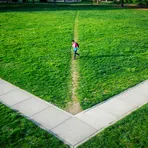
To go through a place like a park to make a shorter route
 3
4.2
3
4.2
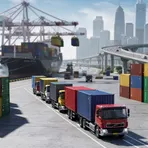
To move people or goods through a place on the way to another


 1
5.4
1
5.4
To walk with heavy steps across a large area

To travel around a place, usually on foot
Compounds

A city in northern Michigan on a bay of Lake Michigan popular with visitors and known for cherries
How Far

Surface Forms
Etymology
To traverse comes from Latin trans- 'across' and vertere 'to turn', like in transfer, so it literally means to 'go across' or move through. That is why to traverse a mountain or desert is to travel across it.