
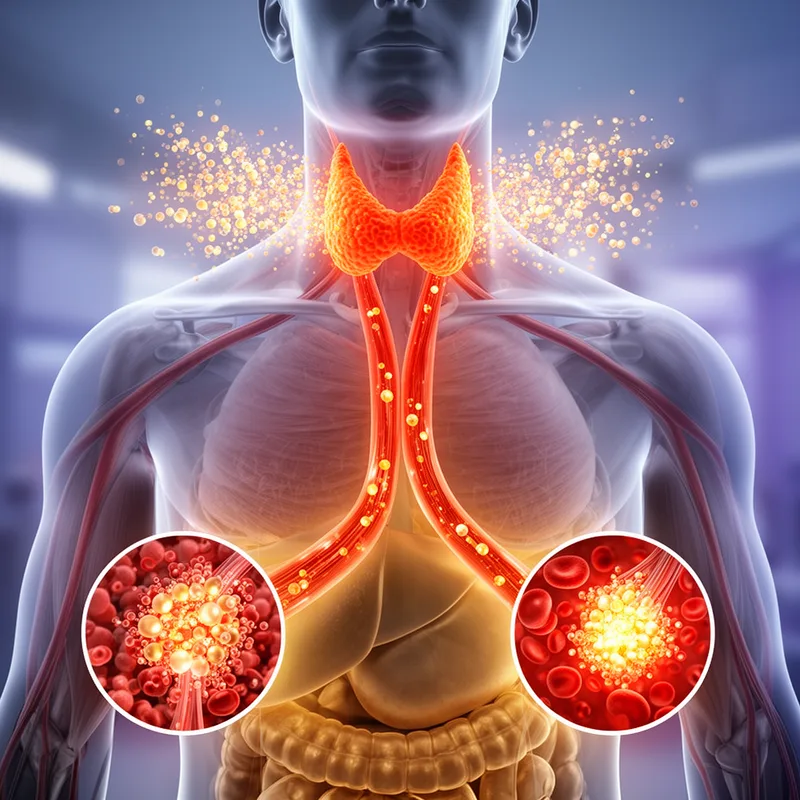
thyroxin
- noun
- /θaɪˈrɒksɪn/
- Specialized
- Increasing and decreasing thyroxin for persons with hyper- and hypoactive thyroid glands, respectively (Luthe, 1964).
- thyroxin levels
Loading YouTube…
Watch on YouTubeSo estradiol being probably the most important insulin and thyroxine.
- So estradiol being probably the most important insulin and thyroxine.
Examples
-
I have Hashimoto's and Graves' disease, take thyroxin, and had these same symptoms among others. Since going GF, the pains in my arms have disappeared (after only a few days), I have much more energy and generally feel much better.
Blog text (31) -
Patients who had elevated levels of TSH were further evaluated for hypothyroidism by measurements of serum free thyroxin (T4) levels and other appropriate tests.
Academic text (1999) -
Doctors often prescribe thyroxin to patients with hypothyroidism to help restore normal hormone levels.
-
After several tests, the doctor confirmed that his low energy was due to insufficient thyroxin production.
-
Iodine is a part of thyroxin, a hormone secreted by the thyroid gland, which regulates the rate at which oxygen is consumed by the cell.
Synonyms
 24
8.9
24
8.9

A hormone from the thyroid that controls how the body uses energy
 2
3.4
2
3.4
Chemicals made in a small gland in the neck that control how the body uses energy
 1
7.4
1
7.4
A hormone from the thyroid gland that controls the body's energy use

A hormone made by the thyroid that controls how fast the body uses energy
Surface Forms
Morphology
thyroxin = thyroid (semi-transparent) = thyro + in
The combining form 'thyro-' clearly relates to 'thyroid' and the suffix '-in' signals a substance/hormone, but the precise biochemical role (regulating metabolism) is specialized knowledge beyond simple morphological inference.
Etymology
Thyroxin comes from thyroid, a name from Greek that means 'shield', because the thyroid gland looks like a small shield at the front of the neck. Thyroxin is the hormone made by that gland and it controls how fast the body uses energy, so the name links the hormone to the 'shield' gland that makes it.