
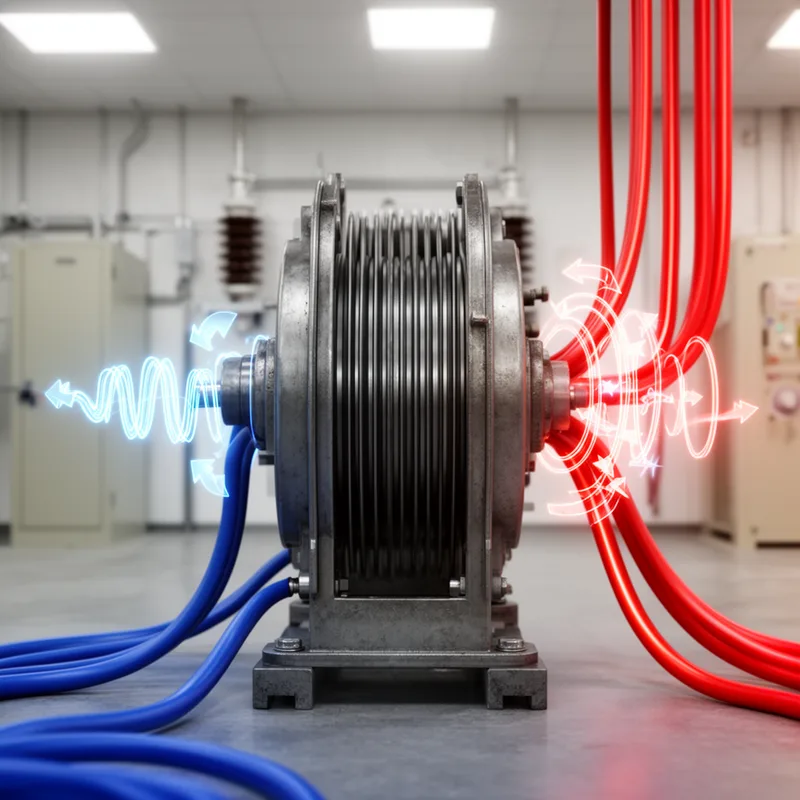
synchronous converter
- noun
- /ˈsɪŋkrənəs kənˈvɜrtər/
- Specialized
- A synchronous converter is used in renewable energy systems to convert the generated alternating current into direct current.
Examples
-
Many industrial plants utilize a synchronous converter to ensure stable power supply during the conversion process.
-
And then we have some more here, synchronous converters, mercury arc rectifiers.
-
In electric vehicles, a synchronous converter plays a crucial role in managing the flow of electricity from the battery to the electric motor.
Synonyms
 7
8.7
7
8.7

A machine that changes alternating current into direct current

A machine with a spinning part that changes alternating current into direct current and back

A device that changes electricity between the type that goes back and forth and the type that flows one way
Surface Forms
Morphology
The phrase is compositionally built from 'synchronous' + 'converter', so a learner who knows both words can infer it denotes a device that converts something using synchronous operation. However, the specific technical sense (an electrical machine for AC/DC conversion and the details of synchronous operation) is specialised and not fully predictable to a B1 learner, so full understanding requires domain knowledge.
Etymology
The noun synchronous converter comes from synchronous ('moving in step at the same time') and converter ('something that changes one thing into another'). Think of gears or dancers keeping the same beat so the machine can change electricity that goes back and forth into a steady flow, so the name means a device that converts one kind of electric current into another by keeping parts 'in step'.