
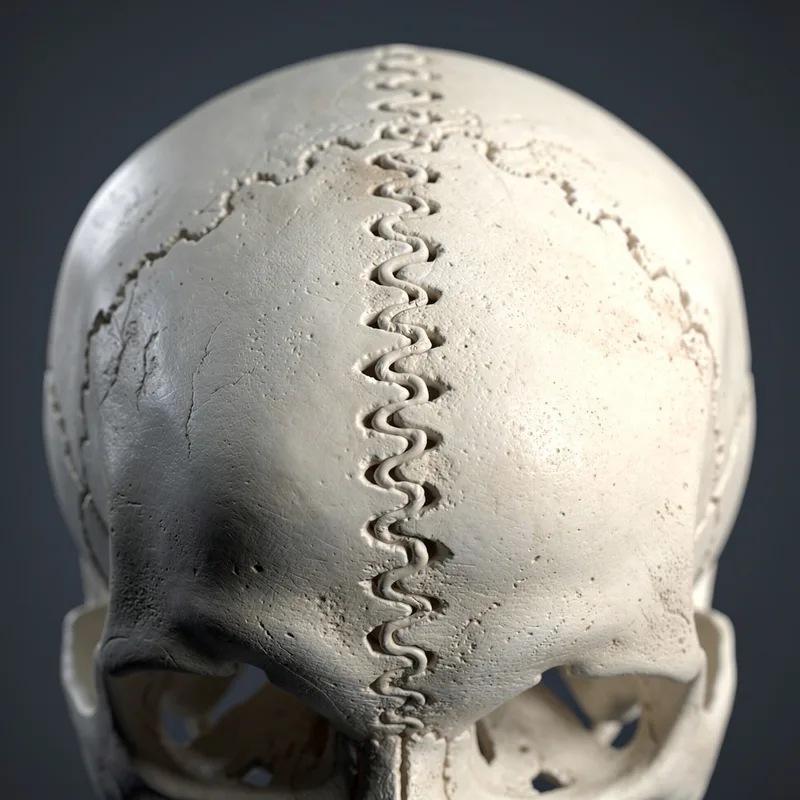
suture
 7
8.2
7
8.2

- noun
- /ˈsuːtʃər/
- Specialized
- As he feared, the impact was at a point where the bones came together, joining in a suture—the weakest point of the skull.
- suture line
Examples
-
At the age of 0-3 years, occipital and innominate sutures started to fuse.
Blog text (27) -
The doctor pointed out the suture between the frontal and parietal bones of the skull.
-
For the occipital bone, the key sutures close and ossify by age 6.
Blog text (27) -
Analysis of individualized education programs to quantify long-term educational needs following surgical intervention for single-suture craniosynostosis.
Academic text (2015) -
Once these mucosal elements are mobilized, they can be approximated along a suture line that will close over the left side of the composite flap (Figure 5).
Academic text (2007) -
Although the fading and obliteration of the sutures holding the bones of the skull together is an unreliable indicator of age by itself, I think it is worth noting that this skull presents no signs of this; it would be expected if the individual were significantly older.
Academic text (2002) -
Carefully examine the suture lines on the skull to identify any signs of trauma.
-
The sutures in a newborn's skull are flexible, allowing for growth during early development.
Synonyms


 1
8.0
1
8.0
A joint at the top of the skull where the frontal and parietal bones meet

A place where two bones in the head join and do not move

A place where bones are held by strong tissue and do not move, often in the skull

A line down the middle where the two top bones of the skull meet

A line where the two bones at the top of the skull join
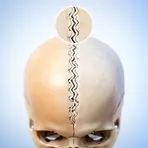
A joint that connects the two bones on the top sides of the skull and does not move
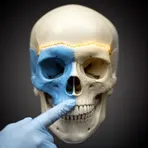
A line where the front and top bones of the skull meet

A zigzag joint at the back of the skull between the occipital and parietal bones
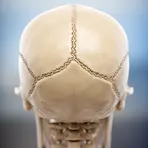
The joint between the occipital and parietal bones at the back of the skull
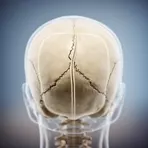
A seam where the back and side bones of the skull meet

A line where the top side of the skull joins the bony area behind the ear

A line where the two bones of the upper jaw meet

A line where the two bones of the upper jaw join

The line where the two bones of the nose join in the skull
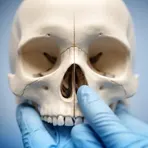
The line where the two bones of the nose meet
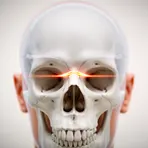
A joint where the nose bones join the forehead bone

A line where the two front skull bones meet that usually closes by age six

A line where the two halves of the front skull bone meet that usually closes by age six
Compounds
- Specialized
1
8.0
A joint at the top of the skull where the frontal and parietal bones meet
- Specialized
A line where the two front skull bones meet that usually closes by age six
- Specialized
A zigzag joint at the back of the skull between the occipital and parietal bones
- Specialized
A joint that connects the two bones on the top sides of the skull and does not move
- Specialized
A line where the top side of the skull joins the bony area behind the ear
Surface Forms
Etymology
Suture for skull bones comes from Latin sutura and suere 'to sew' because the bones meet like pieces of cloth sewn together, like a seam. That's why a skull suture is an immovable 'seam' between bones.