
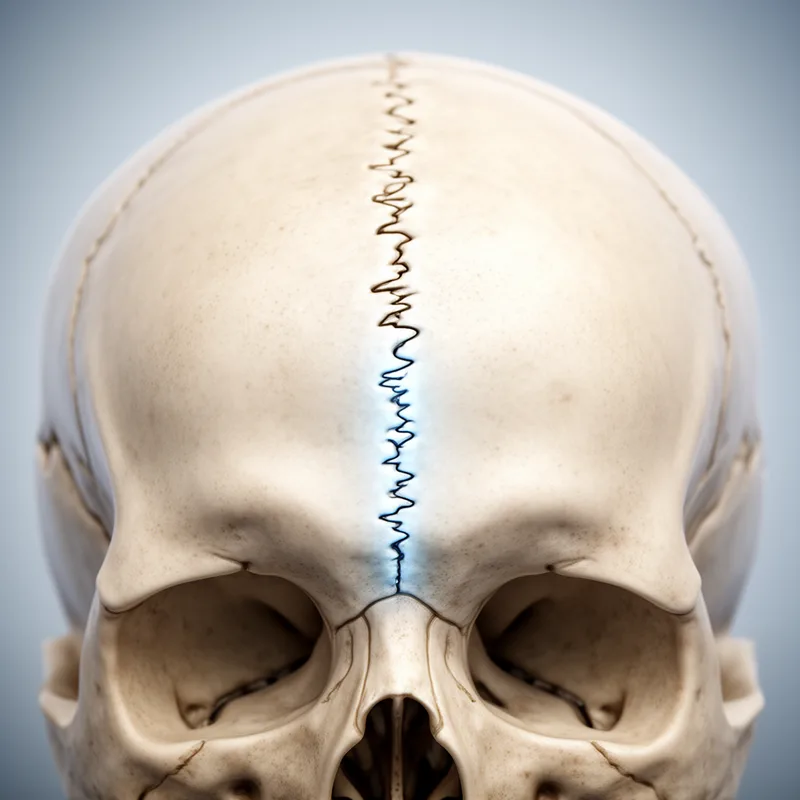
sutura
- noun
- /suˈtʊrə/
- Specialized
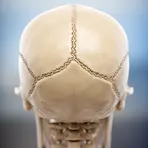
- The coronal sutura separates the frontal bone from the parietal bones.
Examples
-
Craniosynostosis is a condition where a sutura closes prematurely.
-
A fracture at the lambdoid sutura can indicate severe head trauma.
-
The sutura is crucial for skull stability.
-
In infants, the suturae are not fully fused.
-
A fracture at the lambdoid sutura can indicate severe head trauma.
-
Craniosynostosis is a condition where a sutura closes prematurely.
-
The coronal sutura separates the frontal bone from the parietal bones.
Synonyms
 7
8.2
7
8.2

A joint between two skull bones that does not move

A place where bones are held by strong tissue and do not move, often in the skull
Compounds

- Specialized
A line where the two halves of the front skull bone meet that usually closes by age six

- Specialized
The joint between the occipital and parietal bones at the back of the skull

Surface Forms
Etymology
The word sutura comes from the Latin verb suere, which means 'to sew', and it connects to the simple idea of a 'seam'. So a sutura is like a sewn seam where skull bones are joined, which is why it means a fixed joint between skull bones.