
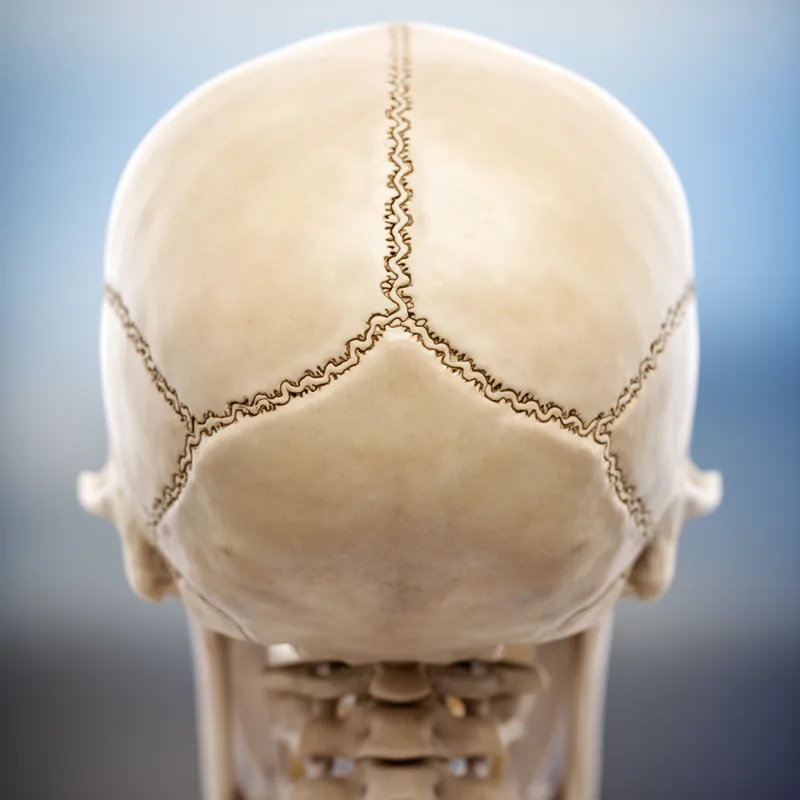
sutura lamboidea
- noun
- /suˈtʃʊrə ˌlæmˈbɔɪdɪə/
- Specialized
- The sutura lamboidea connects the occipital bone with the parietal bones at the back of the skull.
Examples
-
During the anatomy exam, students were asked to identify the sutura lamboidea.
-
A fracture was visible along the sutura lamboidea in the X-ray image.
-
The sutura lamboidea connects the occipital bone to the parietal bone.
-
During the dissection, we observed the sutura lamboidea clearly.
-
During the anatomy exam, students were asked to identify the sutura lamboidea.
-
A fracture was visible along the sutura lamboidea in the X-ray image.
-
The sutura lamboidea connects the occipital bone with the parietal bones at the back of the skull.
Synonyms
 7
8.2
7
8.2

A joint between two skull bones that does not move

A zigzag joint at the back of the skull between the occipital and parietal bones

A place where two bones in the head join and do not move
Surface Forms
Morphology
sutura + lamboidea
This is a specialized anatomical Latin/Greek term: although 'sutura' roughly corresponds to 'suture', 'lamboidea' is not a common English morpheme and its link to the location (the lambdoid suture between occipital and parietal bones) is based on conventionalized technical naming rather than transparent composition. A B1 learner who knows the literal constituents would not reliably infer the specific anatomical meaning, so the expression is idiomatic/technical and unpredictable from its parts.
Etymology
Sutura lamboidea comes from Latin: sutura means 'seam' and lamboidea means 'like the letter lambda'. One popular idea is that the curved seam at the back of the skull looks like the Greek letter 'lambda', so the name points to the seam where the bones meet at the back of the skull.