

to sustain
 41
4.1
41
4.1

- verb
- /səˈsteɪn/
- The bridge was designed to sustain heavy loads without collapsing.
- sustain a load
Loading YouTube…
Watch on YouTubeYou point out circuits and the the one point thing should know you pretty well and you should know the holes and the angle of the wall so that it's sustained.
- You point out circuits and the the one point thing should know you pretty well and you should know the holes and the angle of the wall so that it's sustained.
Examples
-
There were other islands, small and mostly rocky, though all sustained at least a sprinkling of growth.
Fiction book (1992) -
And now it's the state's only self-sustaining scallop farm.
-
In the plants, they can sustain more pressure.
-
So it does show me that this type of environment can sustain a really healthy citrus tree.
-
The Vatican has sustained some structural damage.
-
Was your Westminster Abbey able to sustain the fury of that wind and rain?
Fiction book (1998) -
In short, such technological advances enabled the environment to sustain a larger number of inhabitants.
Academic text (1996) -
These roots can sustain this many leafing joints.
-
My hips can't really sustain a backpack.
-
Instead of a lawn, there was a packed-down dirt patch that sustained only a few pale-green, sickly weeds.
Fiction book (1996)
Synonyms
 ∞
1.0
∞
1.0
To carry or support something with your hands
 285
2.0
285
2.0
To keep something steady so it does not fall
 240
1.0
240
1.0
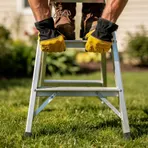
Hold up something so it does not fall
 197
3.7
197
3.7
To make something steady so it stops moving or falling
 115
3.4
115
3.4
To support the weight of something so it does not fall
 82
7.7
82
7.7
To make something stable by fixing ropes or braces
 68
4.1
68
4.1
To hold something up by putting an object under or against it
 64
3.5
64
3.5
To hang something so it can move or swing
 54
3.6
54
3.6
Support something so it does not fall or fail
 17
2.9
17
2.9
Keep something or someone in place and still
Antonyms


How Strong

Surface Forms
Etymology
Sustain comes from Latin parts sub- 'under' and tenere 'to hold', so it meant 'hold up from below'. So when something sustains a bridge, it 'holds it up' and keeps it from falling.