

sugar maple
 4
3.6
4
3.6

- noun
- /ˈʃʊɡər ˈmeɪpəl/
- US
- (As soon as it drops below freezing, the sap stops dripping into the sugar maple buckets.)
- sugar maple tree
- sugar maple, beech
- sugar maple, oak
Examples
-
Balsam fir, basswood, hemlock, sugar maple, yellow birch, and American beech are also found here.
Academic text (1998) -
One day it will be like this sugar maple and shade a good part of the yard.
Fiction book (1994) -
Max bat youth timber bat is produced from sugar maple and is of high standard quality.
Blog text (27) -
Cerulean sky is the paint color and the yellow of all these sugar maples surrounding that blue is like really, really stunning.
-
Louis and Eric follow him over to Tom Heckman's young sugar maple, which they circle while gossiping.
Fiction book (1999) -
You may not have room for sugar maples that climb 60-75 feet, but don't despair.
Blog text (15) -
The major hardwoods are sugar maple, whose brilliant fall foliage attracts numerous visitors in October, American beech, and yellow birch.
Academic text (1998) -
Common trees are red spruce and balsam fir, interspersed with such broad-leaved species as American beech and sugar maple.
Academic text (1998) -
In the fall, the leaves of the sugar maple turn brilliant shades of red and orange.
-
During maple syrup season, many families tap their sugar maple trees to collect sap.
Synonyms
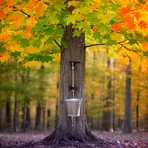
A North American tree with pointed leaves that gives sap for maple syrup

A large North American tree with hard wood used for furniture and sap used to make syrup
How Tall

Surface Forms
Morphology
The compound combines 'sugar' (relating to sweet sap or sugar production) with 'maple' (a type of tree), so its meaning — a maple tree associated with sugar/maple syrup production — is directly derivable from the constituents. This type of noun–noun modifier pattern is common cross-linguistically (e.g., French érable à sucre, Spanish arce azucarero), making it immediately comprehensible to a B1 learner who knows both words.
Etymology
Sugar maple is named for the tree's very sweet sap; people boil the sap to make 'sugar' and maple syrup. So the name joins sugar and maple and explains why this maple is known for sweet sap used for syrup and sugar.