
substrate
 3
7.5
3
7.5

- noun
- /ˈsʌbˌstreɪt/
- Specialized
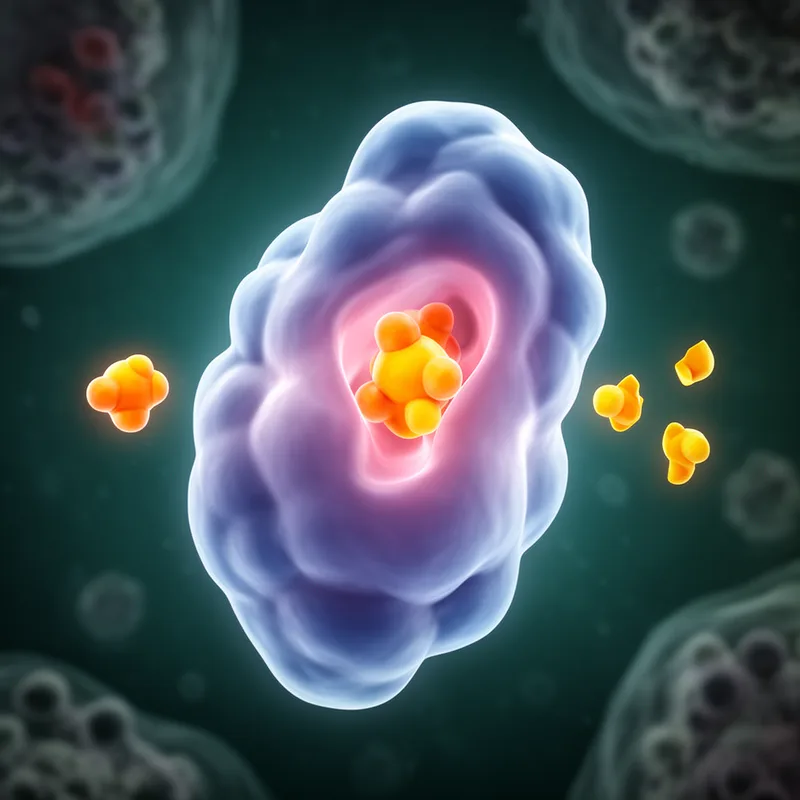
- An enzyme acts by inducing a strain on a substrate bound to its active site (Fersht 1992).
- enzyme and substrate
- substrate binding
- specific substrates
Loading YouTube…
Watch on YouTubeAnd that these polypeptide substrates have complex native folds.
- And that these polypeptide substrates have complex native folds.
- So EPA and DHA are the the substrates, the starting point for making chemicals that turn off inflammation.
- If you give a metabolic substrate like ketones, which in brains of people who have Alzheimer's disease can use readily whereas glucose they can't.
- You're the amount of substrate is, is now going past what the enzymes can take.
Examples
-
So EPA and DHA are the the substrates, the starting point for making chemicals that turn off inflammation.
-
In addition, competition for substrate from competing enzymes remains intact.
Academic text (1994) -
Now let's consider what happens when your substrate concentration equals your KM.
-
To do that, the team plans to investigate the structure of the enzyme-substrate complex.
Academic text (2003) -
Therefore, the brain receives energy substrates, primarily oxygen and glucose, on the fly through its blood supply.
Academic text (2017) -
The next step of the reaction is expected to be coordination of the incoming substrate with compound IX.
Academic text (2001) -
Protein balance will be negatively affected if there are no substrates available for protein synthesis.
Blog text (15) -
In most cases, homologs act on different substrates, either exclusively or have mixed specificity.
Blog text (25) -
Carboxylesterase 1 is a serine esterase, responsible for the hydrolysis of ester- and amide-bond-containing substrates, including xenobiotics and drugs.
Academic text (2018) -
In a biochemical reaction, the enzyme binds to the substrate to facilitate the process.
Synonyms
 2
5.9
2
5.9
A chemical that changes during a reaction, for example hydrogen
Surface Forms
Morphology
Etymology
Substrate comes from the Latin parts sub- 'under' and stratum 'layer', and over time it came to mean the 'thing under' an action. In chemistry and biology a substrate is the substance an enzyme acts on, so you can think of it as the material 'under' the reaction.