

striated muscle fiber
- noun
- /ˈstraɪ.eɪ.tɪd ˈmʌs.əl ˈfaɪ.bɚ/
- Specialized
- Striated muscle fibers are essential for voluntary movements, such as lifting weights.
Examples
-
During the anatomy class, we studied the structure of striated muscle fibers under a microscope.
-
The heart contains striated muscle fibers that help pump blood throughout the body.
-
So this is the main striated muscle fiber, OK?
Synonyms

 4
3.4
4
3.4

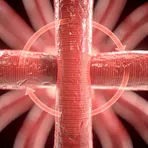
A long cell in the body that gets shorter to make the body move
 3
3.0
3
3.0
A long body cell that makes muscles move by becoming shorter and longer
 2
8.0
2
8.0
A muscle cell that contracts to make parts of the body move

A long muscle cell with light and dark bands that contracts to make movements you choose
Surface Forms
Morphology
The phrase is fully compositional: 'striated' (marked by parallel grooves or stripes) modifies 'muscle fiber' (an elongated muscle cell), so a learner who knows the constituent words can infer it denotes a muscle cell with stripe-like markings that contracts. This follows a straightforward adjective+noun composition common across languages, making the overall meaning directly derivable from the parts.
Etymology
Striated muscle fiber comes from the way it looks: striated means striped and the long fiber shows light and dark bands like thin stripes. These long, striped cells 'contract', which means they get shorter to make muscles move, so the name points to a long, stripe-marked cell that does the work.