
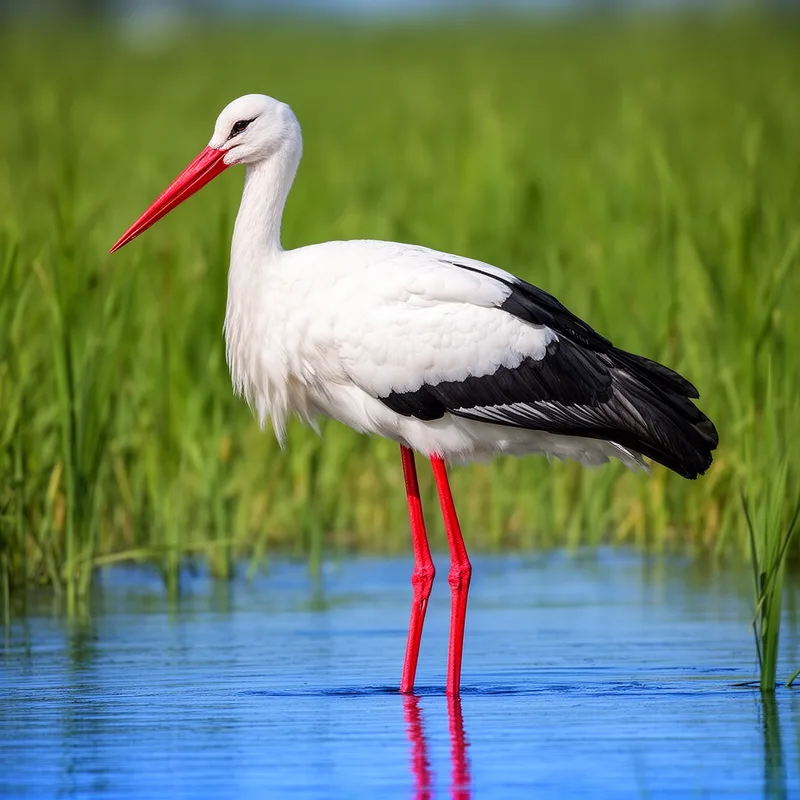
stork
 27
2.3
27
2.3

- noun
- /stɔrk/
- In spring, many storks return to their nesting sites in Europe.
- wood storks
- stork stand
- herons and storks
Examples
-
Additional favorites included the Saddle-Billed Stork with its striking colors and bill.
Academic text (2006) -
Beyond the park, 80% of wood storks in the United States nested in the surrounding area.
Academic text (1994) -
OK, here is Mrs. Stork, making a special delivery to you.
-
Did you know that storks fly as far as Africa?
-
The US Fish and Wildlife Service lists the wood stork as endangered.
Academic text (1994) -
The return of these migratory storks in early May is a cause for celebration.
Academic text (1994) -
There were a few Marabou storks standing around and a couple of crocodiles lying on the banks.
Academic text (1999) -
Egrets, darter cormorants, grey herons, and storks hatch nearly 30,000 chicks every year.
Academic text (2005) -
The stork is known for its distinct long legs and impressive wingspan.
-
I spotted a stork wading gracefully along the riverbank in search of fish.
Compounds

 1
9.6
1
9.6
A large African bird with black and white feathers that eats dead animals and has soft feathers for trims

- US
1
7.4
A large wading bird with a long curved bill and a bald head that lives in American swamps

- Australian
A large Australian stork with mostly white feathers and a black neck and head


A large white bird with black wings and a long red beak that lives in fields and marshes
How Big

Surface Forms
Etymology
Stork comes from an old German word storc that people used for this 'big bird with long legs and a long bill'. A helpful way to remember it is the old story that a stork carries babies. Because the name stayed almost the same in many European languages, stork still means that long-legged wading bird.