
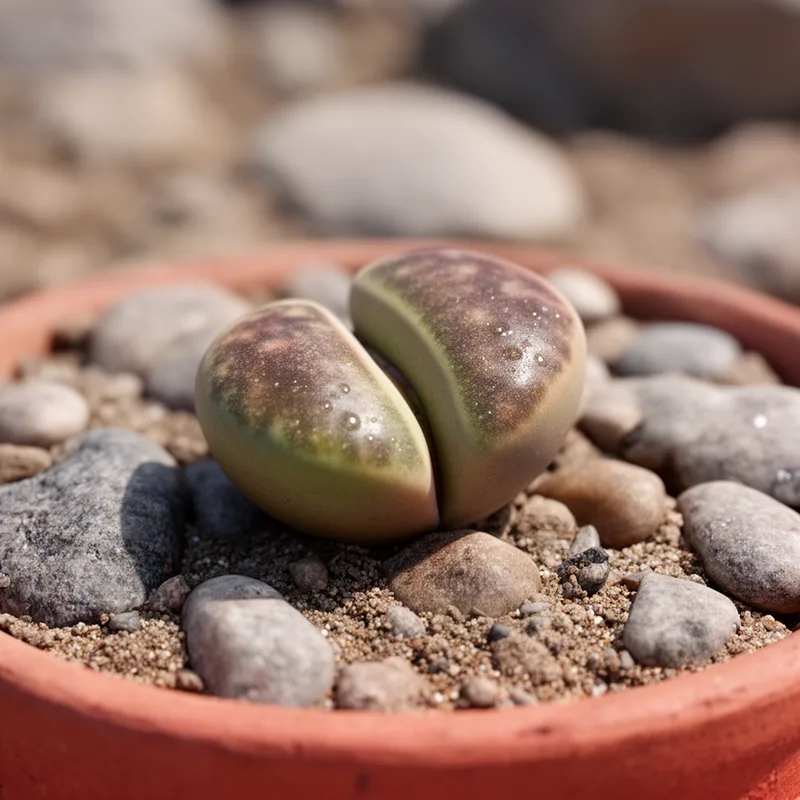
stone mimicry plant
- noun
- South African
- In its natural habitat, the stone mimicry plant blends in perfectly with surrounding rocks to avoid being eaten.
Examples
-
The stone mimicry plant is popular among collectors for its unusual appearance and low maintenance needs.
-
The stone mimicry plant is often used in rock gardens.
-
I bought a stone mimicry plant from the nursery to add a unique touch to my succulent garden.
-
I bought a stone mimicry plant for my balcony.
-
In its natural habitat, the stone mimicry plant blends in perfectly with surrounding rocks to avoid being eaten.
-
The stone mimicry plant is popular among collectors for its unusual appearance and low maintenance needs.
-
I bought a stone mimicry plant from the nursery to add a unique touch to my succulent garden.
Synonyms


 1
9.9
1
9.9
A small plant with thick leaves that look like stones and yellow or white flowers

A small plant that grows in clumps with thick grey-green leaves that look like stones

A small plant with thick leaves that look like a stone

A small plant with thick leaves that looks like a stone and has yellow or white flowers

A small plant with thick leaves that look like stones and a single yellow or white flower

A small succulent plant from South Africa that looks like a stone
Surface Forms
Morphology
The sense 'a plant that mimics stones' is directly and literally derived from combining 'stone' (rock) + 'mimicry' (resembling to avoid detection) + 'plant' (a living organism). This noun‑compound composition is a transparent descriptive label (a plant that mimics stones), so a learner who knows the constituent words can infer the meaning.
Etymology
Stone mimicry plant is a small plant with thick leaves that look like grey stones or lumps of rock. The word mimicry means 'copying', so by looking like stones the plant can 'hide' from animals, and that is why the name describes the plant's way to survive.