

mimicry
 1
6.1
1
6.1

- noun
- /ˈmɪmɪkri/
- Specialized
- Certain species of frogs display mimicry by resembling leaves to avoid being eaten.
- molecular mimicry
- environmental mimicry
Examples
-
As an imitation of the physical world, mapping was an important form of environmental mimicry for the Inuit.
Academic text (1990) -
The important feature or commonality is mimicry of nature.
Academic text (1992) -
So this is a really beautiful example of molecular mimicry and EFG is shown here.
-
It's an effective method of mimicry, but only goes so far to mask their inadequacies.
Blog text (34) -
The act of making accurate maps reinforced the value of mimicry in traditional Inuit society.
Academic text (1990) -
If the caterpillar's mimicry didn't work, he might have been left for dead or taken as food himself.
-
Mapping recapitulates other similar cultural behaviors, all of which spring from the basic value that the Inuit place on environmental mimicry.
Academic text (1990) -
Other New Zealand plants that defend themselves with spines, poison, or mimicry may have feared not only moas but also the numerous rabbit-sized or turkey-sized herbivorous birds now known through their fossil remains.
Academic text (1990) -
The butterfly's mimicry helps it blend in with the flowers, protecting it from potential predators.
-
This bird uses mimicry to imitate the calls of other species as a survival strategy.
Synonyms
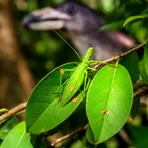
A way animals or plants copy other living things to avoid being eaten
Antonyms

Compounds

- South African
A small water-storing plant with thick leaves that look like stones
How Similar
26
6.9

- Specialized
1
6.1
23
5.9
105
3.0
157
2.7
Surface Forms
Morphology
Etymology
Mimicry comes from a Greek word mimos meaning 'imitator', and it shares the same root as mime and mimic. So in nature mimicry is when one animal or plant 'imitates' another to hide or avoid danger.