
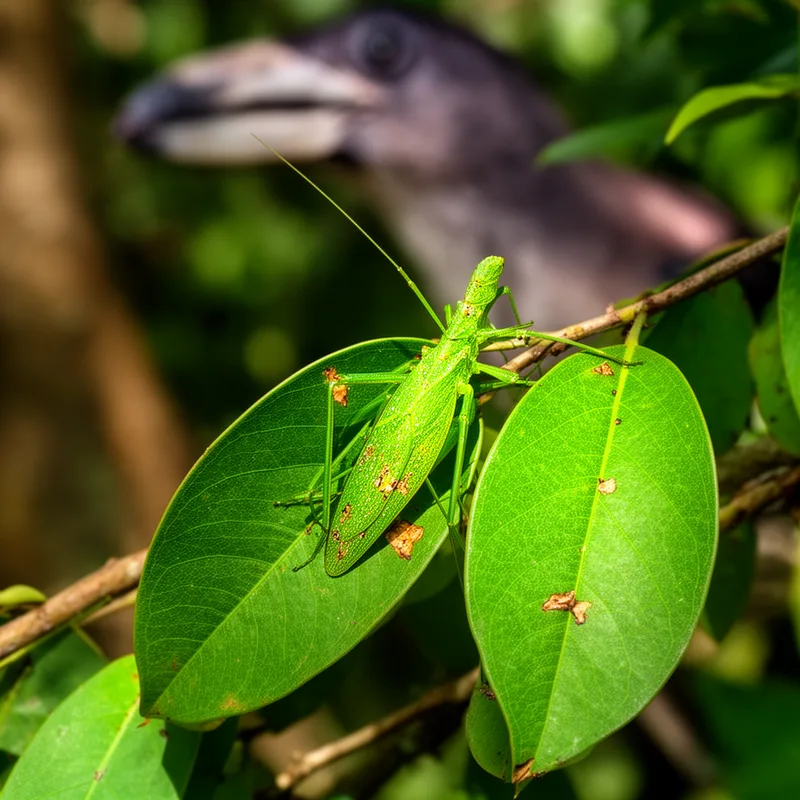
mimetism
- noun
- /ˈmɪmətɪzəm/
- Specialized
- The stick insect uses mimetism to blend in with twigs and avoid being eaten by birds.
Examples
-
The octopus exhibits mimetism by changing its skin texture and color to imitate the ocean floor.
-
Many animals employ mimetism as a survival strategy by resembling the colors and patterns of their surroundings.
-
Positive Mimetism
Academic text (1995)
Synonyms

 19
3.0
19
3.0

Copying another person's actions or speech to learn from them
 1
6.1
1
6.1
A creature that looks like another animal, plant, or object to avoid being eaten
 1
9.9
1
9.9
Making art that copies real life or someone's words
Surface Forms
Morphology
mimetism = mimic (semi-transparent) = mimet + ism
The noun is formed from a Greek-based combining form related to 'mimic' plus '-ism'; the relation to 'mimic' is clear but the term is somewhat technical in biology and not a common everyday formation for learners.
Etymology
Mimetism comes from the root mim- meaning 'to copy', the same root you see in mimic and mime. Many animals copy the look of leaves or dangerous species so they are not eaten, so in biology mimetism means copying others for protection.