

stinking gladwyn
- noun
- UK
- When crushed, the leaves of the stinking gladwyn release an unpleasant odor.
Examples
-
The stinking gladwyn brightens shady gardens with its distinctive purple flowers.
-
The stinking gladwyn blooms in early spring.
-
Many gardeners grow stinking gladwyn for its resilience and striking orange seeds.
-
I saw a stinking gladwyn in the garden.
-
The leaves of the stinking gladwyn emit a foul smell when touched.
-
In my grandmother's garden, the stinking gladwyn is known for its striking purple flowers.
-
Gardeners often warn visitors about the strong odor of the stinking gladwyn when its leaves are crushed.
Synonyms

A plant with purple flowers and leaves that smell bad when crushed

A plant with purple flowers and very smelly leaves that grows every year
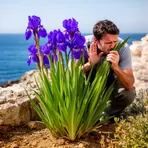
A plant with purple flowers and smelly leaves that grows by the Mediterranean

A plant like an iris that has purple flowers and bad-smelling leaves

A type of iris with purple flowers and leaves that smell bad
Surface Forms
Morphology
stinking + gladwyn
The noun phrase is compositionally formed from the adjective 'stinking' modifying the noun 'gladwyn', so its meaning ('a gladwyn that smells foul') follows directly from the constituents. Although 'gladwyn' is a rare/specialized plant name (not attested in the provided dictionary), the adjective-noun combination is transparently interpretable by a B1 learner who knows both words.
Etymology
The noun stinking gladwyn got its name from a simple picture: when you crush the leaves the plant gives a very bad smell, so people called it stinking and kept gladwyn as the plant name. That's why the name now means a 'type of iris' with purple flowers and leaves that give a 'bad smell'.

