
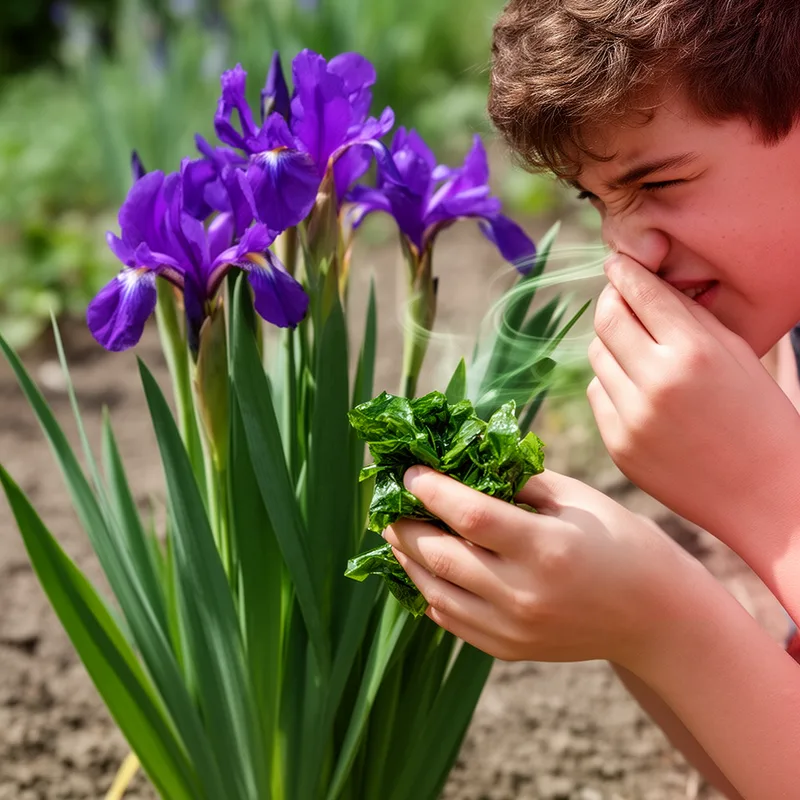
Iris foetidissima
- noun
- Specialized
- The leaves of Iris foetidissima emit a foul odor when crushed, which helps distinguish it from other irises.
Examples
-
Iris foetidissima is often grown in gardens for its attractive seed pods despite the unpleasant smell of its leaves.
-
Native to southern Europe, Iris foetidissima produces striking purple flowers in early summer.
-
The Iris foetidissima blooms beautifully in the spring.
-
Have you seen the Iris foetidissima in the garden?
-
Iris foetidissima is often grown for its vibrant purple flowers, even though its leaves have a foul smell.
-
The leaves of Iris foetidissima release an unpleasant odor when crushed, making it easy to identify.
-
In the wild, Iris foetidissima can be found in damp areas across southern Europe, known for its purple blooms.
Synonyms

A plant with purple flowers and very smelly leaves that grows every year
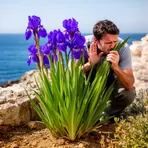
A plant with purple flowers and smelly leaves that grows by the Mediterranean

A plant like an iris that has purple flowers and bad-smelling leaves

A garden plant with purple flowers and leaves that smell bad when crushed

A type of iris with purple flowers and leaves that smell bad
Surface Forms
Morphology
iris + foetidissima
The name is a straightforward compositional noun + adjectival epithet: 'iris' (the flower) plus 'foetidissima' (Latin superlative from 'foetid' meaning very foul‑smelling). If a learner knows both constituent meanings, the overall sense 'an iris that is very foul‑smelling' is directly derivable, following ordinary noun + adjective semantics. Although 'foetidissima' is a Latin form and may be unfamiliar to many learners, the semantic composition itself is transparent.
Etymology
Iris foetidissima comes from Latin and the second word foetidissima means 'very smelly'. People gave it this name because the leaves smell bad when crushed, so the name points to the plant's strong odor even though the flowers look nice.

