

staphylococcus
 3
7.9
3
7.9

- noun
- /ˌstæfɪləˈkɑkəs/
- Specialized
- Risk factors for food contamination by norovirus or Staphylococcus aureus should also be identified.
- Staphylococcus aureus
- Staphylococcus infections
- methicillin-resistant Staphylococcus
Examples
-
An ear swab culture yielded Staphylococcus aureus, which was sensitive to lincomycin and vancomycin.
Academic text (2006) -
Among the FBD pathogens identified, norovirus and Staphylococcus aureus caused 61.7% of outbreaks and 81.5% of cases.
Academic text (2009) -
The number of outbreaks from Staphylococcus aureus gradually increased during this period.
Academic text (2009) -
Acute bacterial endocarditis, on the other hand, is most commonly caused by Staphylococcus aureus.
Academic text (2007) -
Other variations of Staphylococcus have become resistant to the drug vancomycin, a broad-spectrum antibiotic.
Academic text (2005) -
A 71-year-old male patient was admitted with methicillin-resistant Staphylococcus aureus mediastinitis two months after coronary artery bypass grafting.
Academic text (2007) -
The doctor confirmed that my skin infection was caused by staphylococcus bacteria.
-
Many people are familiar with staphylococcus aureus as a common cause of boils.
-
Infections from staphylococcus can lead to serious conditions if not treated promptly.
Synonyms
 14
7.6
14
7.6
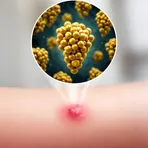
A type of bacteria that can cause skin or blood infections and can be hard to treat with antibiotics
 1
9.5
1
9.5
Tiny round germs that form grape-like clusters and may cause skin infections

A group of round bacteria, many of which cause skin infections, pneumonia and food poisoning
Compounds
- Specialized
A group of round bacteria, many of which cause skin infections, pneumonia and food poisoning
Surface Forms
Morphology
Etymology
The word staphylococcus comes from Greek parts staphylo- meaning 'bunch of grapes' and -coccus meaning 'berry'. This name helps you remember that these bacteria are round like little berries and often grow in grape-like clusters, and that they can cause infections.