to stage

to stage

80 4.1
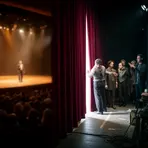
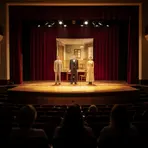
To perform a play or show in front of an audience
  • verb
  • /steɪdʒ/
translation icon : representar
  • Students protested the increasing economic disparity, staging almost 50 demonstrations in the summer of 1968.
  • stage a performance
  • stage a play
  • stage a scene

Examples

  • The Jewish Junior Players of Lodge 274 in Saint Louis staged Snow White and the Union Dwarfs.

    Academic text (1995)
  • In the mid-1980s, the play was also staged by a Jordanian theater company in Amman.

    Academic text (1997)
  • After their research, students could stage a role play involving dating and marriage in an African country.

    Academic text (1996)
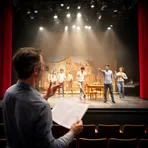
  • Gabriel is staging the play; directing us where to cross, when to sit, and so forth.

  • In 1941, New York's Museum of Modern Art staged the exhibition Indian Art of the United States.

    Academic text (1994)
  • The theater aspired to stage their works and had connections to Victorian theater practitioners.

    Academic text (2017)
  • The Russian Dramatic Group, Lodge 3029, in Boston staged At the Railroad Station.

    Academic text (1995)
  • Members of the Ekeledi Girls Association stage dances wearing festival maidens' attire.

    Academic text (2008)
  • A special Sinulog procession was staged at the Basilica during fiesta week.

    Academic text (1995)
  • The school will stage a play next month, featuring students from all grades.

Synonyms

to present
vsto stage
2.8

Introduce information or ideas to a group

is narrower and focuses on live theatrical events on a raised platform
to perform
vsto stage
583 2.7

To entertain people by singing, acting, or dancing

is used mainly for actions done on a raised platform for live shows

Idioms

327 2.9

Performing in front of an audience in a play or concert

1 7.9

Leave a place or conversation quietly to avoid attention

To perform confidently on stage and keep the audience's attention

5.1

A place to the right of the stage where actors wait out of view of the audience

Phrasal Verbs

Prepare conditions that make an event or change likely

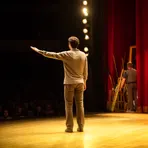
Go in front of an audience to perform or speak and be the main focus

1 6.1

To give a lively, exciting performance in front of an audience

Become the center of attention in public

To lead actors and decide how a play looks on stage

Compounds

center stage
  • Informal
30 3.8

A position or role that gets the most attention

22 3.9

Nervousness before you perform or speak in front of people

19 3.6

A different name used publicly by an actor or musician

15 4.6

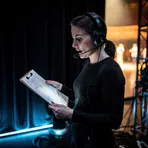
A person who runs the stage and gives cues during a show

stage right
  • Jargon
10 3.4

The right side of a stage as a person facing the audience sees it

8 3.0

The most important place at an event where the main shows happen

stage left
  • Specialized
8 3.9

The part of a stage to the actor's left when facing the audience

8 3.9

The middle part of a stage where the main action happens

7 3.4

An entrance at the back of a theater used by performers and staff

stage direction
  • Specialized
3 3.9

A note in a play script that tells actors and crew how to move, speak, or change lights and scenery
3 3.6

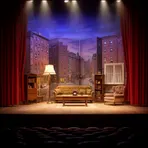
The background and objects on a stage that show where and when a play happens

stage director
  • Specialized
2 4.2

A person who guides actors and plans the action on stage

A low voice that actors use so the audience can hear it

stage crew
  • Specialized
1 3.2

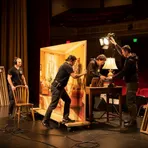
A group of workers who move scenery and handle props in a play

1 2.3

The part of a theater where actors perform for an audience

embryonic stage
  • Specialized
1 5.5

An early part of an animal or plant's life when it is still very small

A raised platform outside for performances and speeches

1 5.2

A platform by the water where people and goods get on and off boats

genital stage
  • Specialized
1 8.2

A period that begins at puberty when sexual feelings mature and focus on close adult relationships
right stage
  • Jargon
1 6.8

The side of a stage on the actor's right when they face the audience

thrust stage
  • Jargon
1 7.7

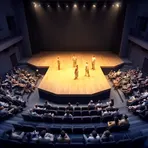
A stage that sticks out into the audience with seats on three sides

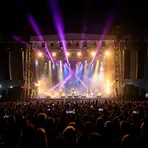
People dance on a stage in front of an audience as part of a show

1 9.9

A man who waits outside a theatre to meet actors and ask for autographs
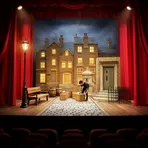
The arrangement of background and objects on a stage to show where the story happens

A short time of very strong enthusiasm after a big personal change that makes people act overly excited or extreme

anal stage
  • Specialized
8.4

A childhood stage when pleasure and conflict focus on toilet training and bowel and bladder control


7.9

A part of a bus route where the price stays the same

latency stage
  • Specialized
9.3

A childhood period from age five to puberty when sexual feelings are quiet and energy goes into friendships and learning


left stage
  • Jargon
5.5

The part of the stage on an actor's left when facing the audience

microscope stage
  • Specialized
3.9

A flat platform on a microscope where you put a slide to look at it

germinal stage
  • Specialized
7.2

The first stage when a project or living thing begins to form

8.8

A teacher who talks most of the time and does not let students speak

oral stage
  • Specialized
7.9

The first stage of baby development when babies get pleasure from sucking or chewing

9.9

A stage in early childhood when a child's private parts become a main focus of pleasure and curiosity

7.9

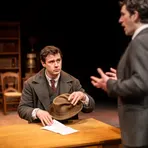
Small actions an actor does on stage to make the scene feel real

A feeling of being nervous and excited before going on stage

stage monitor
  • Specialized
3.3

A speaker on stage that faces performers so they can hear themselves

stage effect
  • Specialized
3.8

A sound, light, or smoke trick used in a play to make scenes more dramatic
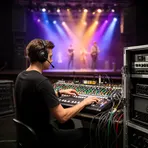
stage technician
  • Specialized
4.6

A person who sets up and runs lights, sound, and stage equipment

How Formal

to produce
301 4.5
to present
2.8
to stage
80 4.1
to mount
114 4.3
to put on
223 2.8

Surface Forms

stage infinitive
staged past
staged past participle
staging present participle
stages third person singular

Etymology

Stage as a verb comes from putting a play on a stage (a place to stand), so to 'stage' something first meant to present it to an audience. That's why to stage a play is to put it on for people to see.