
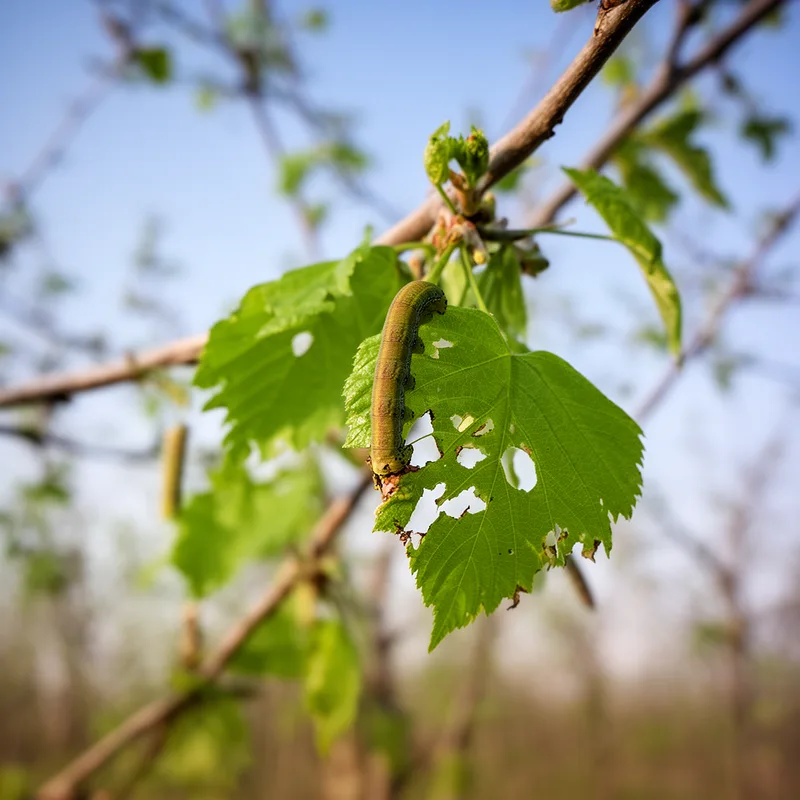
spring cankerworm
- noun
- /sprɪŋ ˈkæŋkərwɜrm/
- Specialized
- The spring cankerworm often causes noticeable defoliation of elm and maple trees in early spring.
Examples
-
Orchard owners are concerned about the increasing population of spring cankerworms this year.
-
Damage by the spring cankerworm can be minimized with timely pest management.
-
The spring cankerworm is a common pest in many gardens.
-
During spring, the spring cankerworm can damage deciduous trees.
-
The spring cankerworm often causes noticeable defoliation of elm and maple trees in early spring.
-
Orchard owners are concerned about the increasing population of spring cankerworms this year.
-
Damage by the spring cankerworm can be minimized with timely pest management.
Synonyms


 1
8.8
1
8.8
A small caterpillar with legs only at the front and back that moves by making a loop

A small moth whose caterpillars often eat the leaves of trees in early spring

A group of moths whose caterpillars include the spring cankerworm

A green caterpillar that eats the leaves of fruit and shade trees
Surface Forms
Morphology
The noun is a straightforward composition of 'spring' (the season) modifying 'cankerworm' (a caterpillar that harms trees), so the combined meaning — a cankerworm associated with or active in spring — is directly inferable from the parts. Season + animal/pest compounds are a common, productive pattern in English and other languages, so a B1 learner who knows both constituents would readily understand this term.
Etymology
The noun spring cankerworm comes from two simple parts: spring, because this caterpillar appears in early spring, and cankerworm, an old name for caterpillars that eat leaves and cause 'cankers', or sore spots, on trees. That's why the name means 'a caterpillar pest that eats and damages trees in spring'.