
looper


 1
8.8
1
8.8
- noun
- /ˈluːpər/
- Specialized
- Green lacewing larva attacks a cabbage looper larva. Magnified about 15x.
- cabbage looper
Examples
-
One crop that has failed the stick test is cabbage, so Surround doesn't control cabbage loopers and other worms.
Academic text (2000) -
This effect results in increased survival of velvet bean caterpillars and cabbage loopers in soybeans.
Academic text (1992) -
We talked about all the time with the the cabbage moths, the cabbage loopers, they hone in on the cabbage plants or brassicas.
-
The next step, Kendall said, is to apply this new approach to field populations; the researchers are now looking at pine looper moth (Bupalus pinarius) populations in Europe.
Academic text (1998) -
In 1994, they tested this approach by combining, in one dispenser, pheromones to control two pests—the diamondback and the cabbage looper.
Academic text (1994) -
Using video microscopy, entomologist Allen Cohen observes details of a green lacewing larva feeding on a cabbage looper larva.
Academic text (1997) -
Cabbage loopers are often found munching on the leaves of vegetable gardens in late summer.
-
Gardeners should watch for loopers, as their feeding can cause significant damage to crops.
-
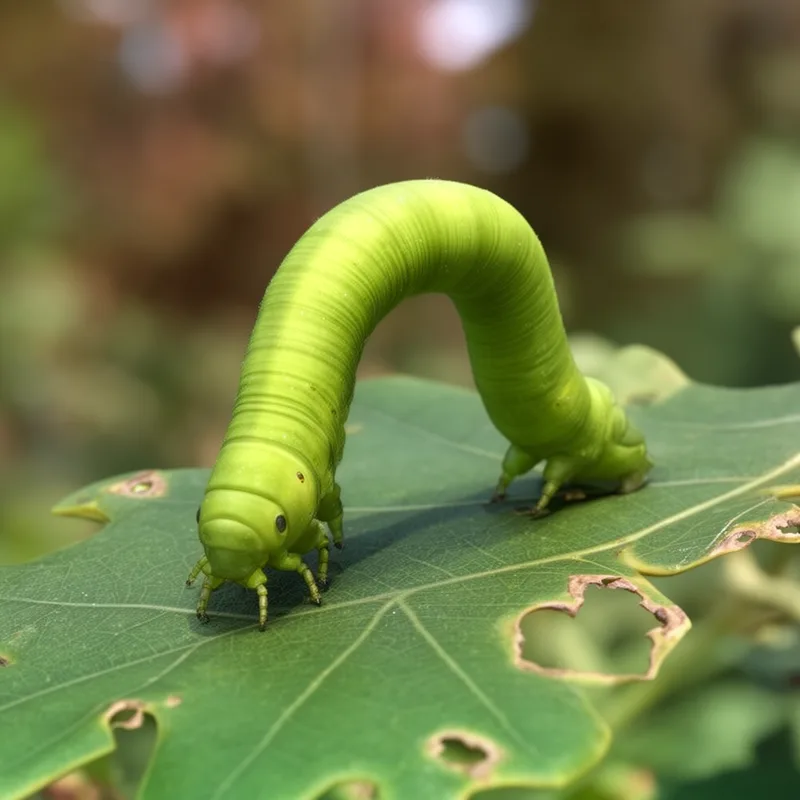
The small green loopers can be identified by the way they move in a characteristic looping motion.
Synonyms
 43
1.0
43
1.0
A soft young insect like a worm that becomes a butterfly or moth and eats leaves
 3
5.3
3
5.3
A small green caterpillar that moves by making a loop with its body

A small caterpillar with legs only near its head and tail that moves by making a loop
Surface Forms
Morphology
Etymology
Looper comes from the simple word loop plus the ending -er, which means 'one who loops'. This caterpillar moves by lifting its middle to make a curved 'loop' with its body as it walks, so it is called a looper.