
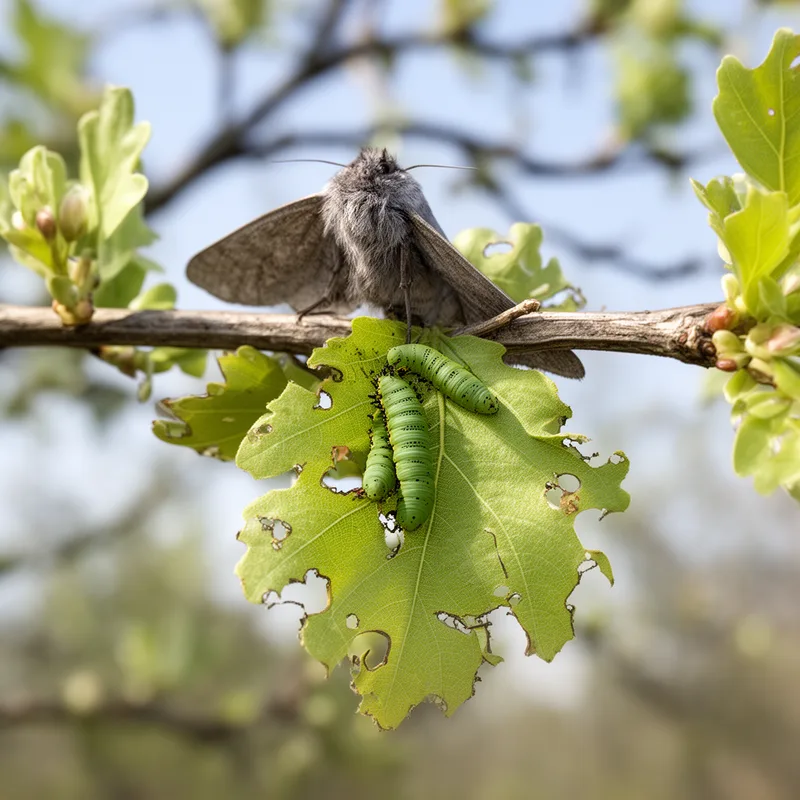
Paleacrita vernata
- noun
- Specialized
- The larvae of Paleacrita vernata often defoliate oak and elm trees in early spring.
Examples
-
Gardeners took steps to control Paleacrita vernata infestations in their yards.
-
Entomologists studied the life cycle of Paleacrita vernata to develop better pest management strategies.
-
The Paleacrita vernata is often mistaken for other moths.
-
Many gardeners struggle with the Paleacrita vernata infestation.
-
The larvae of Paleacrita vernata frequently cause damage to shade trees in residential areas.
-
To protect their trees, homeowners have implemented various methods to manage Paleacrita vernata populations.
-
During spring, many people notice the effects of Paleacrita vernata as they see their trees losing leaves.
Surface Forms
Morphology
Paleacrita + vernata
This is a Latin binomial (genus + specific epithet). If a learner knows that Paleacrita is a genus of moths, they can infer the phrase names a species within that genus (i.e. a moth), but the specific epithet 'vernata' does not transparently contribute a general English meaning like 'spring cankerworm' to a B1 learner. Taxonomic naming follows a conventional, language-specific pattern rather than ordinary compositional semantics, so partial inference is possible but full meaning requires domain knowledge.
Etymology
Paleacrita vernata may come from an old word for 'spring', and the part vernata points to that idea. The moth's caterpillars appear in early spring and eat many tree leaves, so the name helps you remember it is a 'spring' pest.

