

spore
 68
6.7
68
6.7

- noun
- /spɔr/
- Specialized
- Harvesting takes place in late summer and can cause mold spores to become airborne.
- fungal spores
- airborne spores
- produce spores
Loading YouTube…
Watch on YouTubeAnd then they found these spore based plants.
- And then they found these spore based plants.
- Like it's A and they say they found spores of of of chaga spores in the stratosphere.
- And that rain will splash soil onto the leaves and that soil contains those spores.
- So truffles are just a strategy that many mushrooms and non mushrooms have taken to get their spores dispersed by animals.
- There is nowhere on earth besides maybe the North and South Pole that is immune to blight spores.
- Now the alcohol based sanitizers may not be enough to effectively kill these C diff spores.
- So like time or distance or number of wins or spores in a Petri dish, etc.
- But it and some cheeses it's great on others it's a real contaminant because you think thousands of spores on that one hair that ball.
Examples
-
Some may enter a resting or spore stage to protect themselves against pH extremes.
Academic text (1999) -
Their Hardy spores sport thick cell walls that allow them to survive extreme temperatures.
-
One spore made all our water lethal.
-
And wherever a spore touches you... a parasite will grow.
-
Frames one and two show the spores that are colored.
-
And that cap has gills which contain millions of spores that can be spread via the wind.
-
If these were poisonous spores, we'd all be dead by now.
-
When infected flowers or leaves are plucked, a grayish-white cloud of fungal spores can usually be seen.
Academic text (2000) -
A high-tech filtration system also keeps tiny, floating particles and airborne spores from leaving the greenhouse.
Academic text (2000) -
In spring, the fungus produces tiny spores that are dispersed by wind and rain.
Synonyms


 1
9.9
1
9.9
A part of a plant, like a seed or cutting, that can grow into a new plant
 1
9.9
1
9.9
A very small plant cell that is the smaller of two types and grows into the male part, like pollen
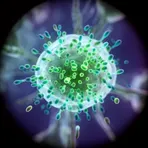
A tiny cell like a spore that helps fungi or protozoa reproduce

A tiny spore a fungus makes at the tip of a short stalk to spread
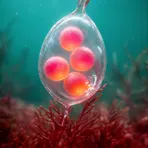
One of four tiny reproductive cells that form inside a small sac in some algae or fungi

A thick-walled cell that forms when a thread of fungus or algae breaks so it can survive
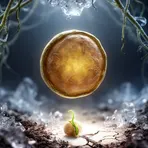
A sleeping cell that some fungi or algae make and that can grow again after a long inactive time

A very strong resting form that some bacteria make to survive harsh conditions
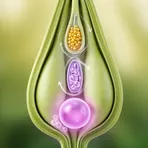
A large spore in some plants that grows into the female stage that makes eggs

Large spore in some plants that grows inside the ovule into the female part that makes eggs

A tiny spore produced by some mushrooms to make a new fungus

A thick-walled cell that two similar sex cells form when they join to survive bad conditions in fungi and algae

A thick-walled spore formed when an egg cell is fertilized in some algae and fungi
Compounds
- Specialized
A sleeping cell that some fungi or algae make and that can grow again after a long inactive time

- Specialized
A small bag on a plant or fungus that holds tiny parts for making new plants
- Specialized
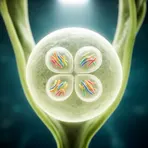
A cell in plants, fungi, or algae that divides to make four spores with half the usual genes

- Specialized
A small baglike part on ferns and fungi that holds tiny cells that grow into new plants
How Big

Surface Forms
Etymology
Spore comes from the Greek word spora, meaning 'seed' or 'sowing', and is the same root as the word sporadic. So, a spore is like a tiny 'seed' that can grow into a new plant, fungus, or microorganism.