
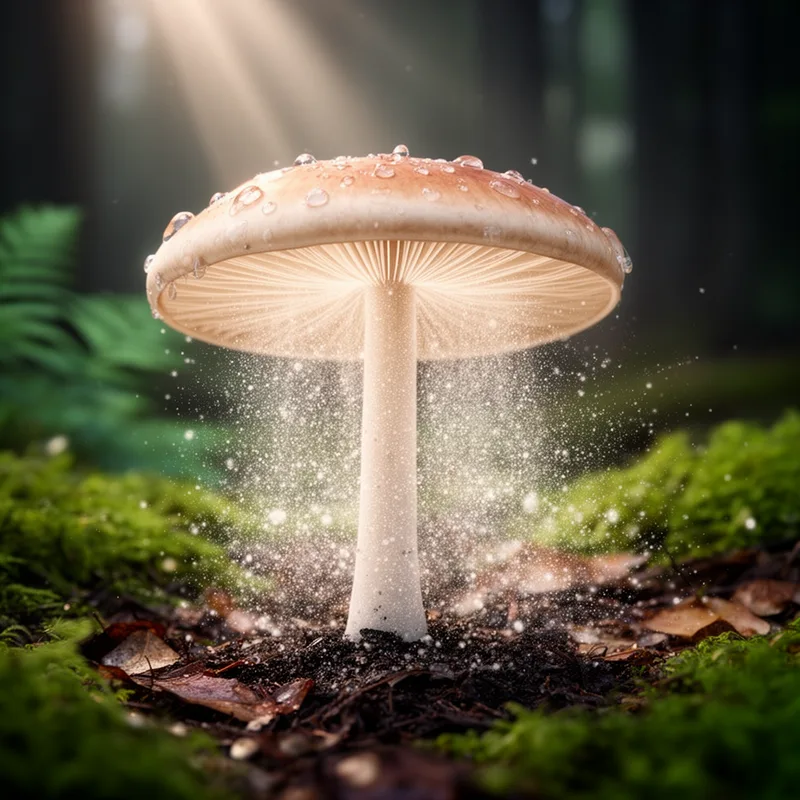
to spore
 1
7.0
1
7.0

- verb
- /spɔr/
- Specialized
- After heavy rain, mushrooms begin to spore, releasing thousands of spores into the air.
Examples
-
Certain fungi spore in the autumn to ensure their survival during the winter months.
-
The biologist explained how algae spore during the reproduction cycle.
-
We're never going to get to spore, otherwise.
Blog text (12) -
However, the requirement of multi-territorial competition creates problems when attempting to generalize this phenomenon to spore competition.
Academic text (1994) -
It turned out that the knockout is a cheater; it contributes more than its share to spore tissues.
Academic text (2007) -
For example, Eggerton-Warburton and Allen (2000) reported that increased N deposition converts a species-rich arbuscular-mycorrhizal community into one that is dominated by small-spored mutualists.
Academic text (2000)
Synonyms
To make and release tiny cells that can grow into new plants or mushrooms
Compounds
- Specialized
A sleeping cell that some fungi or algae make and that can grow again after a long inactive time

- Specialized
A small bag on a plant or fungus that holds tiny parts for making new plants
- Specialized
A cell in plants, fungi, or algae that divides to make four spores with half the usual genes

- Specialized
A small baglike part on ferns and fungi that holds tiny cells that grow into new plants
Surface Forms
Etymology
Spore comes from the Greek word spora, meaning 'seed' or 'sowing'. So, to spore is to release tiny 'seeds' called spores into the air or environment so they can grow into new life.