
sporidium
- noun
- /spəˈrɪdiəm/
- Specialized
- Researchers collected sporidia samples to study their role in disease transmission.
Examples
-
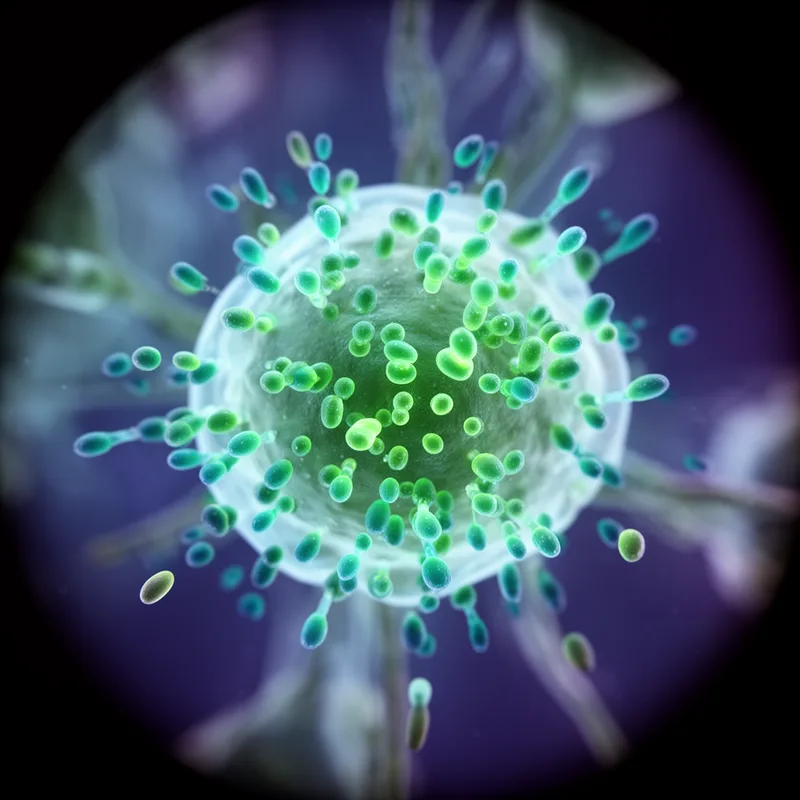
A sporidium can be seen under a microscope.
-
How does a sporidium develop into a mature organism?
-
Under the microscope, the scientist identified several sporidia among the fungal cells.
-
The life cycle of this protozoan includes a stage where sporidia are released into the environment.
-
Under the microscope, the scientist identified several sporidia among the fungal cells.
-
The life cycle of this protozoan includes a stage where sporidia are released into the environment.
-
Researchers collected sporidia samples to study their role in disease transmission.
Synonyms

 68
6.7
68
6.7

A very small thing made by some plants and fungi that can grow into a new plant or fungus
Surface Forms
Morphology
Etymology
The word sporidium comes from the Greek word spora meaning 'seed' or 'spore' and the small ending -idion meaning 'little'. Just like the common word spore, sporidium means a 'little spore', so it is the name for a very small reproductive cell in fungi and protozoa.