
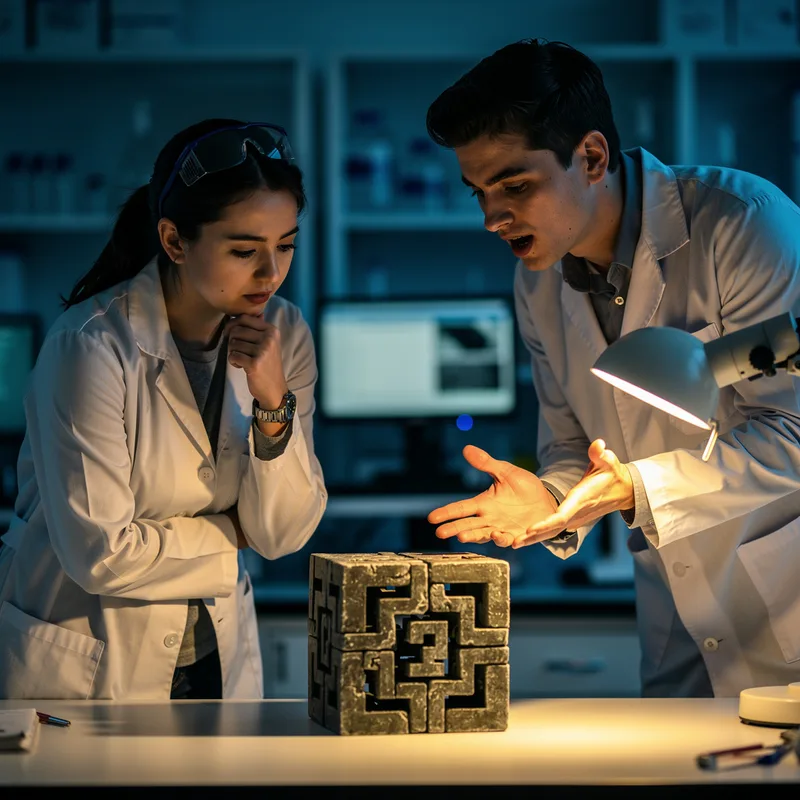
to speculate
 254
4.8
254
4.8

- verb
- /ˈspɛkjʊˌleɪt/
- "It's very difficult to speculate why discrimination against Asian American students is happening," he said.
- speculate about the future
- speculate about the reason
- speculate about the cause
Loading YouTube…
Watch on YouTubeSo people have speculated about what that function might be.
- So people have speculated about what that function might be.
- She's like but I I'm speculating that it's lymphoma.
- Do I report or speculate about what really happened?
- But this I I don't speculate too much about these things.
- So we don't have to speculate about what will happen.
- To this end, Dyson speculated they'd build a sphere around the star.
- Don't care to speculate, but do you think it was one person?
- And it was speculated that he had absence seizures.
- And their statement was frankly so nonsensical that I'm speculating that that must be the case.
- But can we speculate about what goes here?
- Huxley speculated that if people saw this, they might.
- Well, I've speculated on that, and there's a number of sources.
- I don't really, I don't, I wouldn't want to speculate.
- I think a lot of people speculate he enjoyed watching.
- Honestly, I don't know, but I would speculate twice a week.
Examples
-
Several theoretical frameworks have been used to speculate why females have left coaching.
Academic text (1990) -
Entomologists speculate that millions of undiscovered species exist in the forests...
-
Do I report or speculate about what really happened?
-
At present, we can only speculate about the causes of this effect.
Academic text (2011) -
I think it's a little too early to speculate at this stage about the motive.
-
Instead, historians must speculate based on the remaining evidence and draw their own conclusions.
Academic text (2008) -
However, by leaving, people could only speculate; they could not say definitively that I would have failed.
Academic text (2008) -
China might follow one of these paths, some speculate, or blaze its own.
Academic text (2008) -
Some informants have speculated that jealousy or financial differences are a primary issue.
Academic text (2013) -
The scientists can only speculate about the results until they conduct more tests.
Synonyms
 ∞
2.7
∞
2.7
To think something is true without clear proof
 ∞
3.2
∞
3.2
Think something is true without proof
 ∞
1.0
∞
1.0
To form an opinion or estimate without enough information
 925
3.6
925
3.6
To think something is likely true without definite proof
 795
1.5
795
1.5
To think something is true without clear proof
 89
4.9
89
4.9
To show that something is likely true because of evidence
 39
6.1
39
6.1
Form an idea to explain why something happens with little proof
 33
7.6
33
7.6
To guess that something is true without enough evidence
 22
7.2
22
7.2
To suggest an idea about why something happens that can be tested
 7
7.6
7
7.6
To form an opinion without enough proof

Suggest a possible explanation without strong evidence
Antonyms


How Certain
428
3.1

- US
22
7.2
7
7.6
254
4.8
∞
2.7
768
1.0
Surface Forms
Morphology
speculate = specul + ate
The root 'specul' is a Latinate combining form not a standalone English word, and the verb-forming suffix '-ate' is not transparently meaningful to an average B1 learner, so the meaning cannot be reliably derived from the parts.
Etymology
Speculate comes from the Latin root spec- meaning 'to look', the same root in spectator and inspect. So to speculate is like 'looking' at ideas or possibilities in your mind, which is why it means guessing or thinking about what might be true.